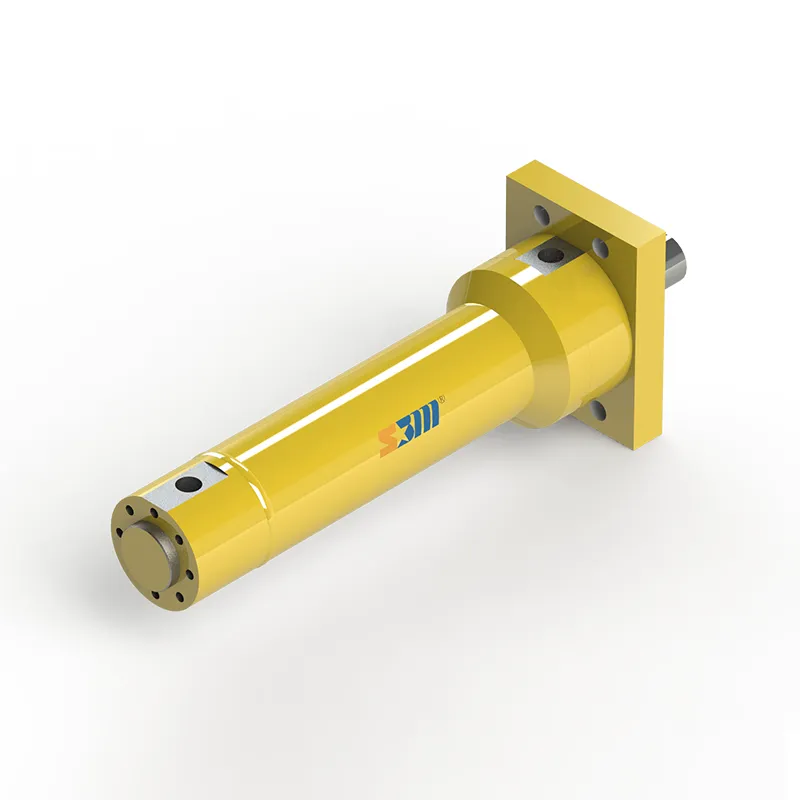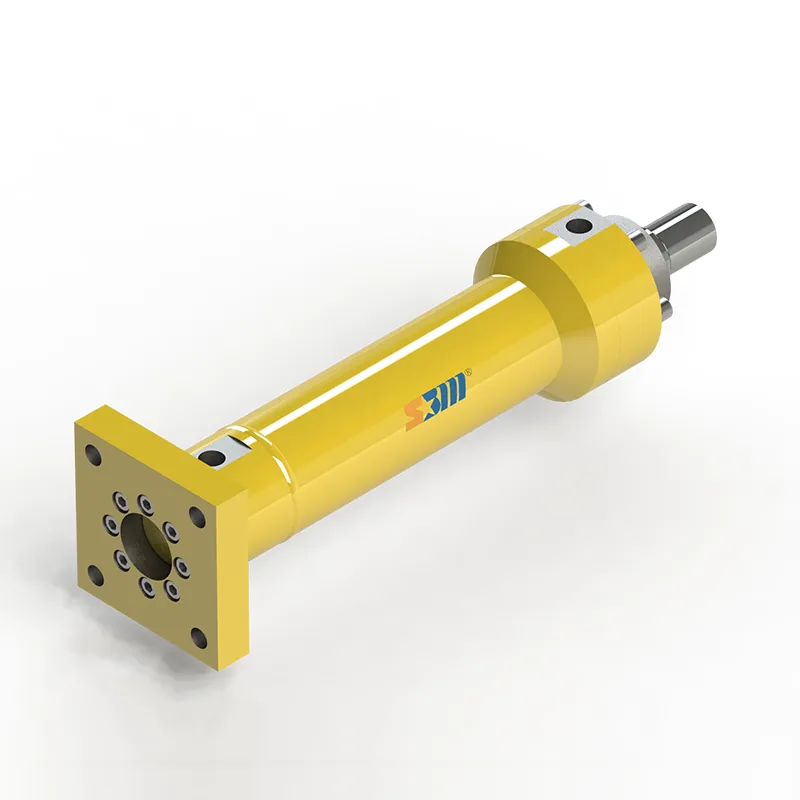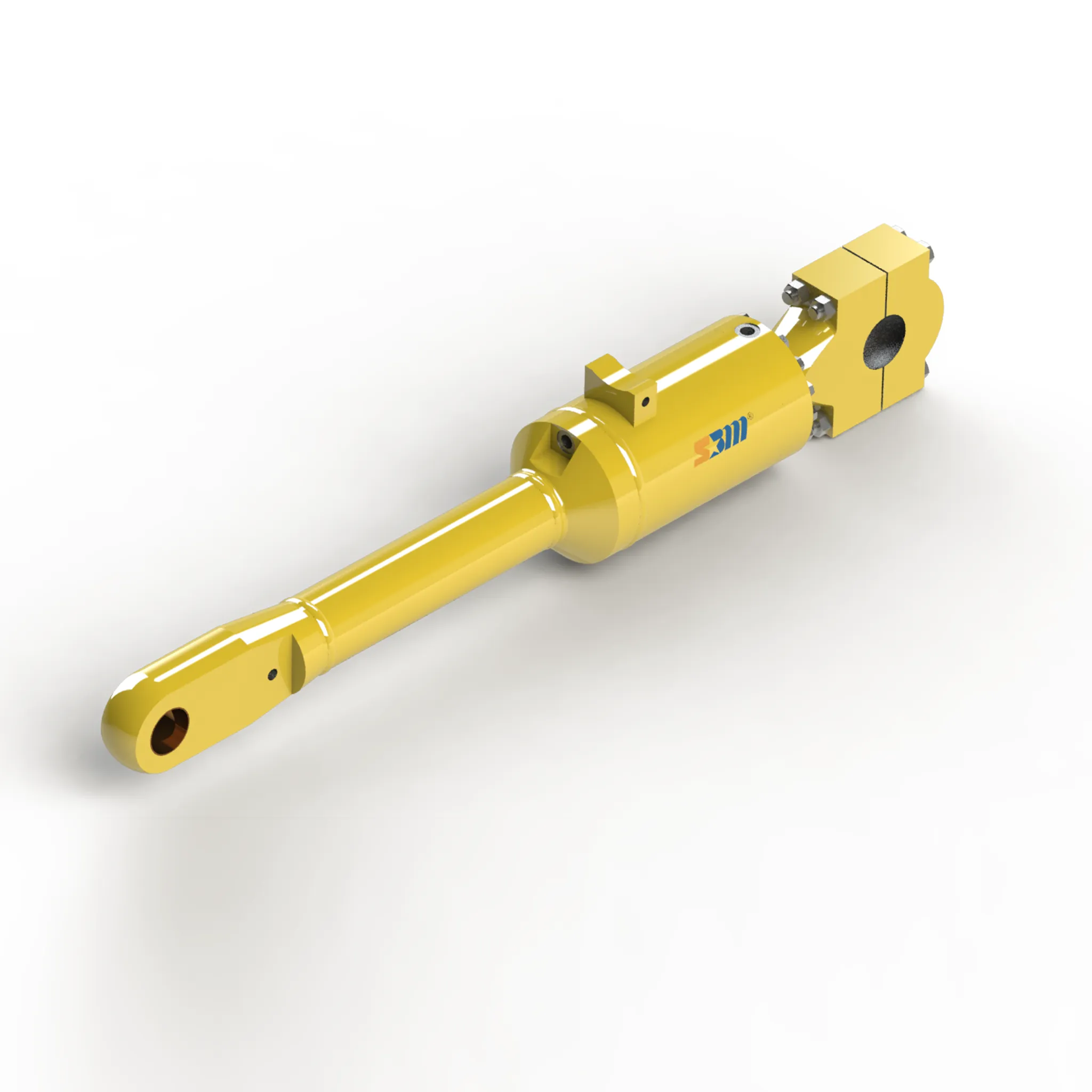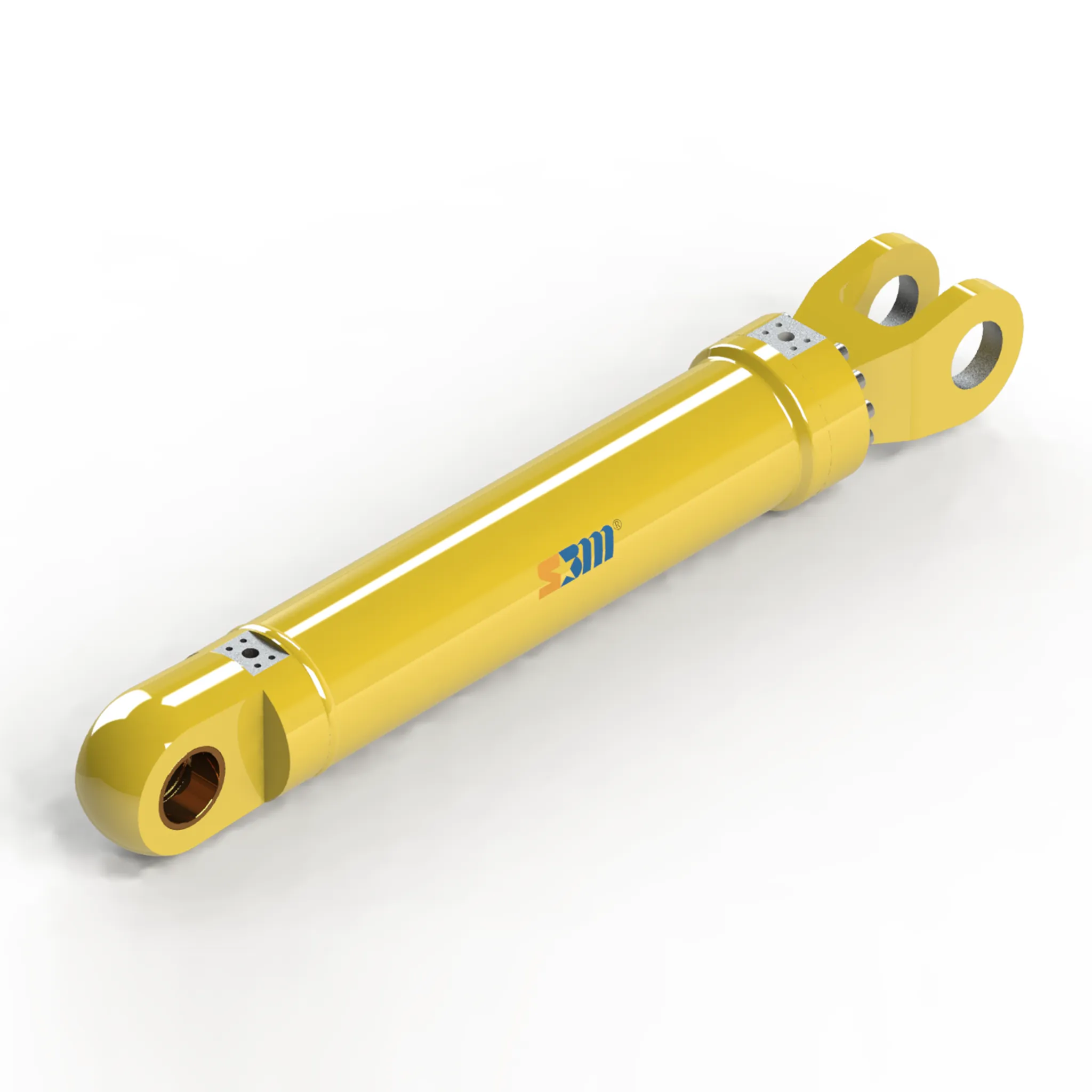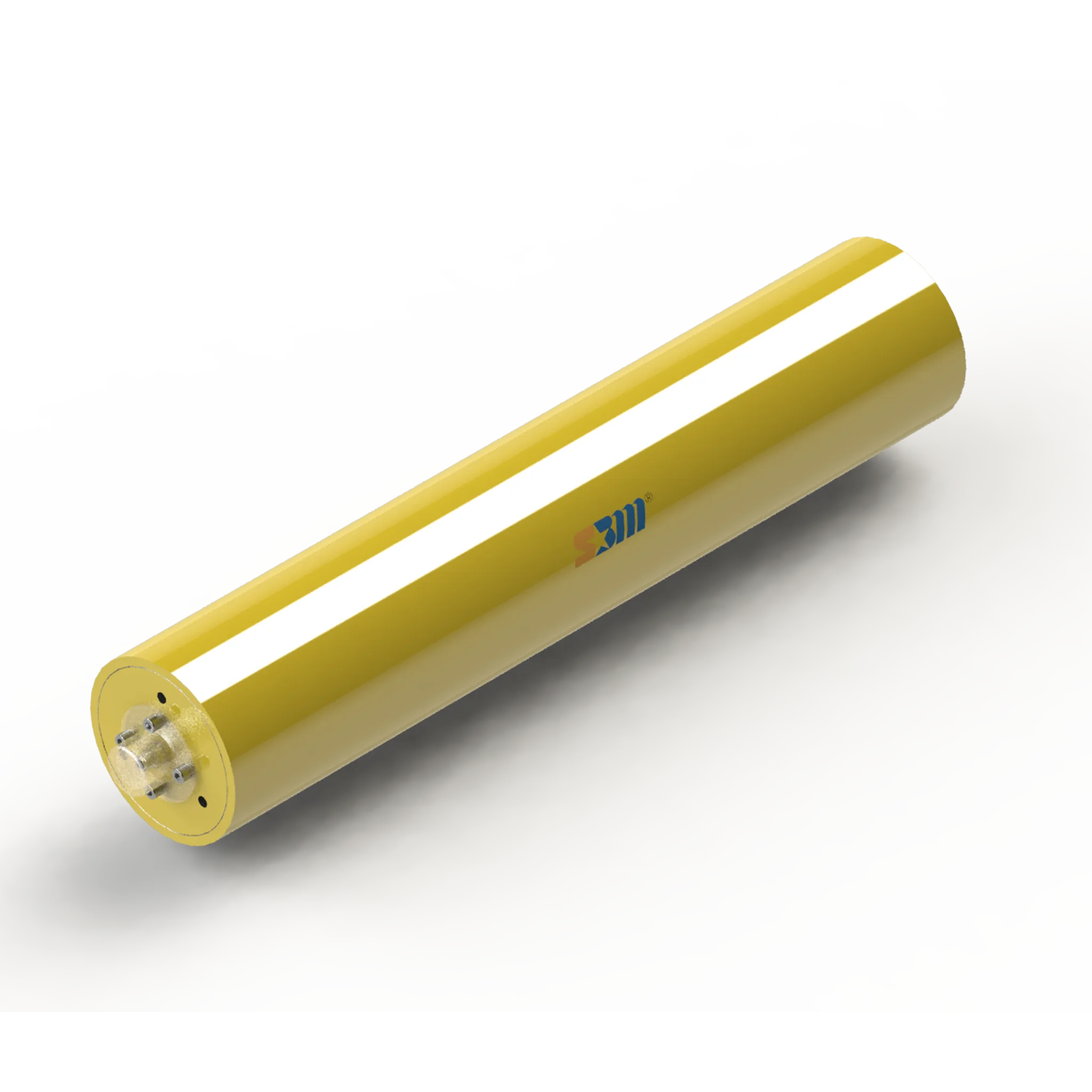
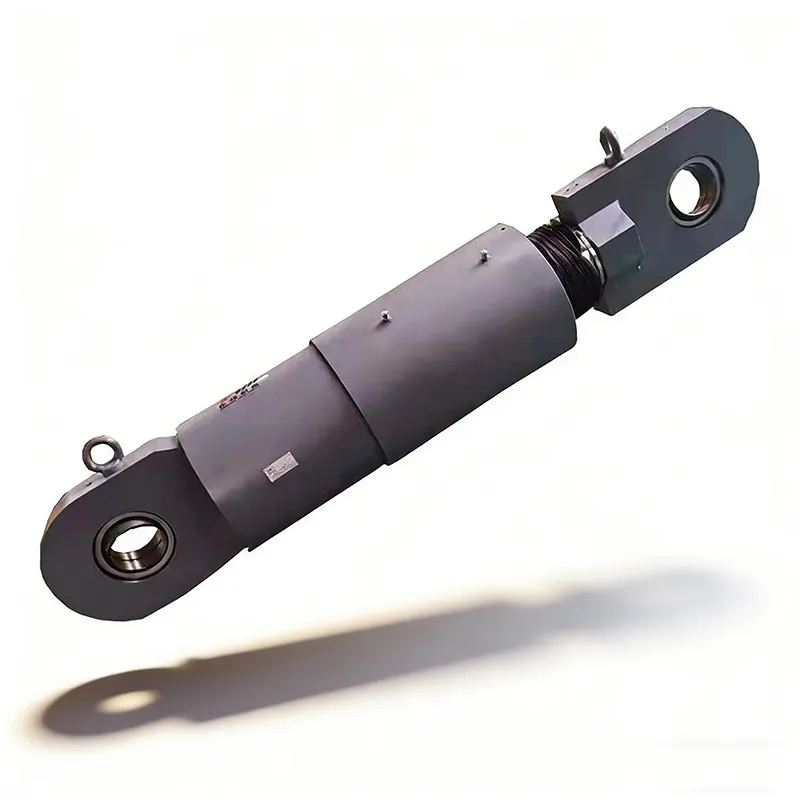


A hydraulic damping cylinder, or adjustable shock absorber, is a specialized fluid power component designed to provide motion control by generating a resistive force proportional to velocity. Unlike a standard actuator designed for power transmission, its primary purpose is energy dissipation.
During piston rod movement, hydraulic fluid is displaced from one chamber to the other. The resistance to fluid flow—created by forcing it through small orifices, adjustable valves, or porous media—generates a damping force. This force opposes the direction of motion, smoothly absorbing shock and decelerating the load.
Fixed Damping Type
The damping coefficient is nonadjustable, featuring the simplest structure and stable, low-cost damping performance for standard working conditions.
Adjustable Damping Type
Damping force can be modified by adjusting the orifice size via external knobs or valves, enabling flexible adaptation to diverse working scenarios and operational requirements.
Self-Compensating/Temperature-Compensated Type
The built-in compensation mechanism minimizes the impact of hydraulic oil viscosity changes caused by temperature fluctuations, ensuring consistent damping performance across varying ambient temperatures.
Single-Acting vs. Double-Acting
Damping can be provided during the extension stroke, retraction stroke, or both strokes, catering to different motion control needs of hydraulic systems.
Typical Application Scenarios
This hydraulic fluid damper is exclusively tailored for bridge engineering scenarios:
· Highway and railway overpass bridges (seismic and wind load protection)
· Urban viaducts (resistance to heavy vehicle braking force impact)
· Long-span cable-stayed bridges (control of structural vibration caused by strong winds)
· Coastal bridges (corrosion-resistant protection against salt spray and extreme weather)
Technical parameter
| Model | Loading Force(KN) | Stroke (mm) | Speed (a) | OD(mm) | Pin hole Dia(mm) |
| SBM-VFD-100*Stroke | 100 | 0~±500 | 0.1<a<1 | 125 | 40 |
| SBM-VFD-200*Stroke | 200 | 0~±500 | 0.1<a<1 | 150 | 50 |
| SBM-VFD-300*Stroke | 300 | 0~±500 | 0.1<a<1 | 150 | 50 |
| SBM-VFD-400*Stroke | 400 | 0~±500 | 0.1<a<1 | 194 | 60 |
| SBM-VFD-500*Stroke | 500 | 0~±500 | 0.1<a<1 | 194 | 80 |
| SBM-VFD-600*Stroke | 600 | 0~±500 | 0.1<a<1 | 194 | 80 |
| SBM-VFD-700*Stroke | 700 | 0~±500 | 0.1<a<1 | 245 | 90 |
| SBM-VFD-800*Stroke | 800 | 0~±500 | 0.1<a<1 | 245 | 90 |
| SBM-VFD-900*Stroke | 900 | 0~±500 | 0.1<a<1 | 273 | 100 |
| SBM-VFD-1000*Stroke | 1000 | 0~±500 | 0.1<a<1 | 273 | 100 |
| SBM-VFD-1100*Stroke | 1100 | 0~±500 | 0.1<a<1 | 273 | 110 |
| SBM-VFD-1200*Stroke | 1200 | 0~±500 | 0.1<a<1 | 273 | 110 |