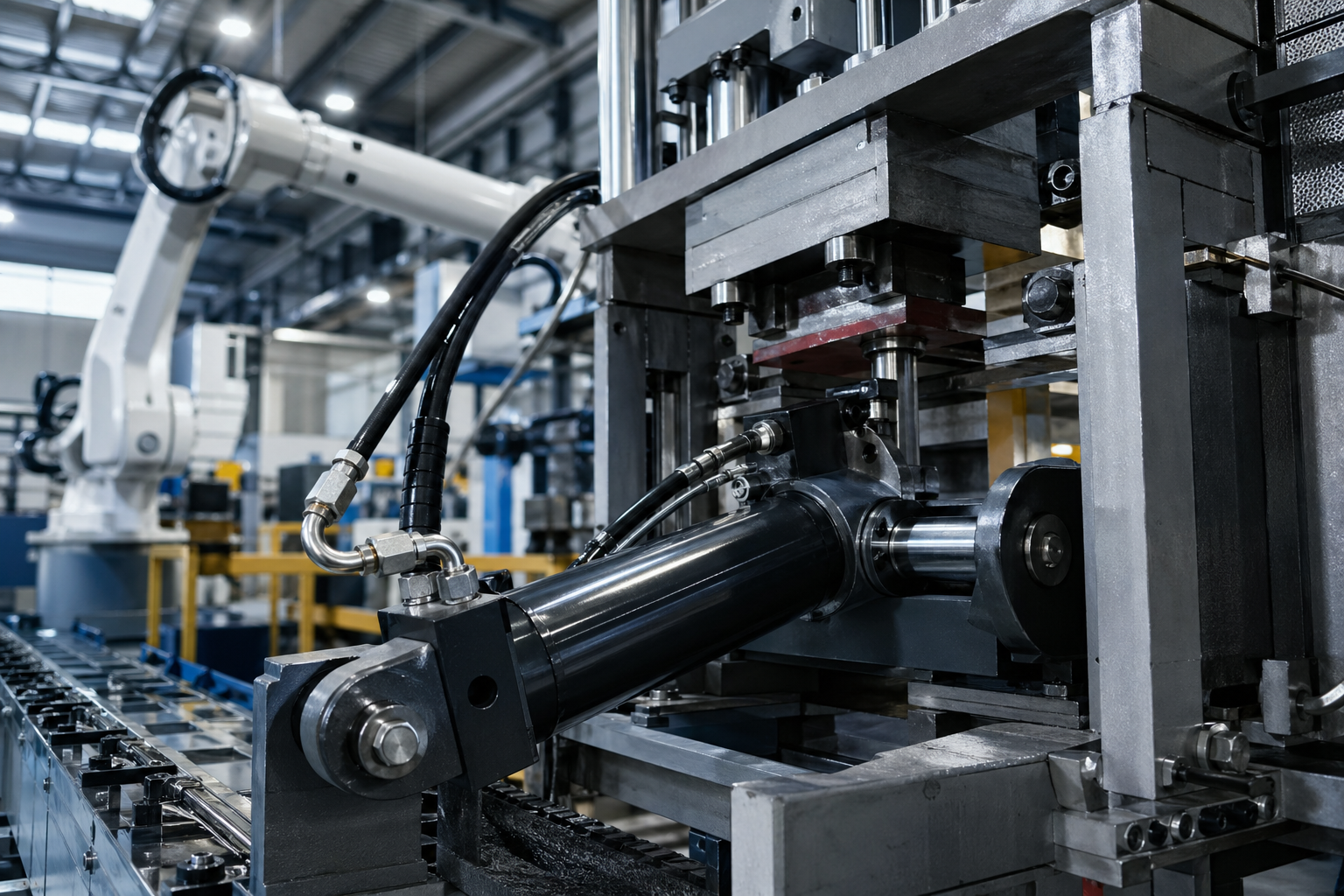
Hydraulic systems are used in almost every heavy industry, from steel production and mining to construction, marine engineering, and manufacturing. These systems rely on strong hydraulic cylinders to create force, movement, and pressure for demanding operations.
However, even the most powerful hydraulic cylinder cannot work properly without reliable sealing systems. One of the most important sealing components is the hydraulic seal ring.
A hydraulic seal ring helps prevent oil leakage, maintain system pressure, and protect the cylinder from contamination. At the same time, the ring cylinder rod oil seal plays a key role in sealing the moving piston rod and protecting the system from dust, water, and external damage.
Without proper sealing, hydraulic cylinders can quickly lose pressure, suffer internal wear, and cause costly machine downtime.
In this guide, we will explain how hydraulic seal ring systems work, the role of ring cylinder rod oil seals, common seal failure causes, and how Shellppon provides professional sealing solutions for industrial clients worldwide.
Hydraulic Seal Ring: Why It Is Essential in Hydraulic Systems
A hydraulic seal ring is designed to control hydraulic oil flow inside a cylinder while preventing leakage.
Its main functions include:
- Maintaining hydraulic pressure
- Preventing external oil leakage
- Preventing internal pressure loss
- Protecting internal parts from contamination
- Reducing friction between moving parts
- Improving equipment efficiency and service life
Because hydraulic cylinders often work under high pressure and harsh environments, seal rings must be strong, precise, and durable.
Even a small seal failure can lead to:
- Pressure loss
- Slow machine movement
- Oil leakage
- Seal damage
- Increased maintenance costs
- Unexpected production downtime
This is why seal ring quality directly affects the reliability of the entire hydraulic system.
Ring Cylinder Rod Oil Seal: The First Line of External Protection
The ring cylinder rod oil seal is installed where the piston rod moves in and out of the hydraulic cylinder.
Its main purpose is to prevent hydraulic oil from leaking outside while protecting the inside of the cylinder from dust, water, mud, and other contaminants.
Because the piston rod is exposed to the outside environment, the rod oil seal faces constant stress from:
- High pressure
- Continuous movement
- Friction
- Corrosion
- Dirt and debris
This makes it one of the most heavily used sealing components in the hydraulic cylinder.
If the rod oil seal fails, external leakage is usually the first visible sign.
Early replacement is important to prevent larger system damage.
Main Types of Hydraulic Seal Ring Applications
Different hydraulic cylinders require different sealing solutions depending on pressure, temperature, and working conditions.
Rod Seal Rings
Rod seal rings are installed around the piston rod to prevent external leakage.
They are critical for maintaining pressure and keeping the system clean.
Piston Seal Rings
Piston seal rings are installed on the piston inside the cylinder.
They separate the pressure chambers and prevent internal leakage.
Without proper piston sealing, the cylinder may lose pushing force even when no oil leakage is visible outside.
Buffer Seal Rings
Buffer seals help absorb sudden pressure spikes.
They protect the main rod seal and improve service life in high-pressure systems such as steel mill hydraulic cylinders.
Wiper Seal Rings
Wiper seals remove dirt, dust, and moisture from the piston rod before it enters the cylinder.
This helps protect rod seals and piston seals from contamination.
Static Seal Rings
Static seals are used in fixed connections such as cylinder heads and end caps.
They prevent leakage in non-moving areas.
Materials Used for Hydraulic Seal Ring Systems
Choosing the right seal material is just as important as choosing the right seal design.
Different industries require different materials.
Polyurethane (PU)
PU offers strong wear resistance and is commonly used for rod seals and piston seals.
It performs well in high-pressure applications.
Nitrile Rubber (NBR)
NBR is cost-effective and suitable for standard hydraulic systems.
It performs well under normal temperature and pressure conditions.
PTFE
PTFE provides excellent chemical resistance and high-temperature performance.
It is often used in demanding industrial environments.
Viton
Viton is ideal for extreme temperatures and chemical exposure.
It is commonly used in marine systems and specialized heavy-duty applications.
Shellppon selects seal materials based on real working conditions instead of using one standard material for every project.
Common Causes of Hydraulic Seal Ring Failure
Understanding why hydraulic seal rings fail helps reduce maintenance costs and improve cylinder life.
Contaminated Hydraulic Oil
Dirty hydraulic oil can quickly damage seals and scratch cylinder surfaces.
Contamination is one of the biggest causes of seal failure.
Incorrect Installation
Improper installation can twist, cut, or overstretch the seal ring.
This often causes early leakage.
Rod Surface Damage
Scratches, corrosion, and poor chrome plating on the piston rod can rapidly damage the ring cylinder rod oil seal.
Excessive Pressure
Sudden pressure spikes can break seals or shorten service life.
Buffer seals are often used to solve this problem.
Wrong Material Selection
Using the wrong seal material for temperature, pressure, or oil type leads to fast failure.
Professional seal selection is always more reliable than choosing based only on price.
Shellppon Case Study: Steel Mill Hydraulic Seal Ring Upgrade
A steel production customer experienced repeated oil leakage problems in AGC hydraulic cylinders used in rolling mill operations.
The local repair team replaced the rod oil seals several times, but the leakage continued.
Shellppon engineers performed a full inspection and found:
- Rod surface scoring
- Worn piston seal rings
- Incorrect rod oil seal material
- Pressure spikes damaging the sealing system
Instead of only replacing the visible leaking seal, Shellppon provided a complete hydraulic seal ring upgrade including:
- High-performance rod seal rings
- Improved piston seal ring design
- Buffer seal optimization
- Rod surface restoration
- Full hydraulic pressure testing
The result was:
- Longer maintenance intervals
- Reduced oil leakage
- Better rolling mill stability
- Lower maintenance costs
This project showed that solving seal problems requires complete system analysis, not simple part replacement.
Shellppon Solution for Mining Equipment Rod Oil Seal Problems
A mining client working under heavy dust and high-load conditions faced repeated failures of ring cylinder rod oil seals in large hydraulic cylinders.


Shi Bang Machinery benefits from a superior, convenient location that enables smooth transportation. Guided by its "Credibility First, Customers Supreme" mission, it provides qualified products. Backed by full-process quality control, the enterprise upholds its commitment to reliable quality, timely delivery, reasonable pricing, and excellent service while working to establish an influential industry brand.
Copyright © 2026 无锡市世邦机械制造有限公司 Ltd. All Rights Reserved. POWERED BY WEIMOBTRADE
