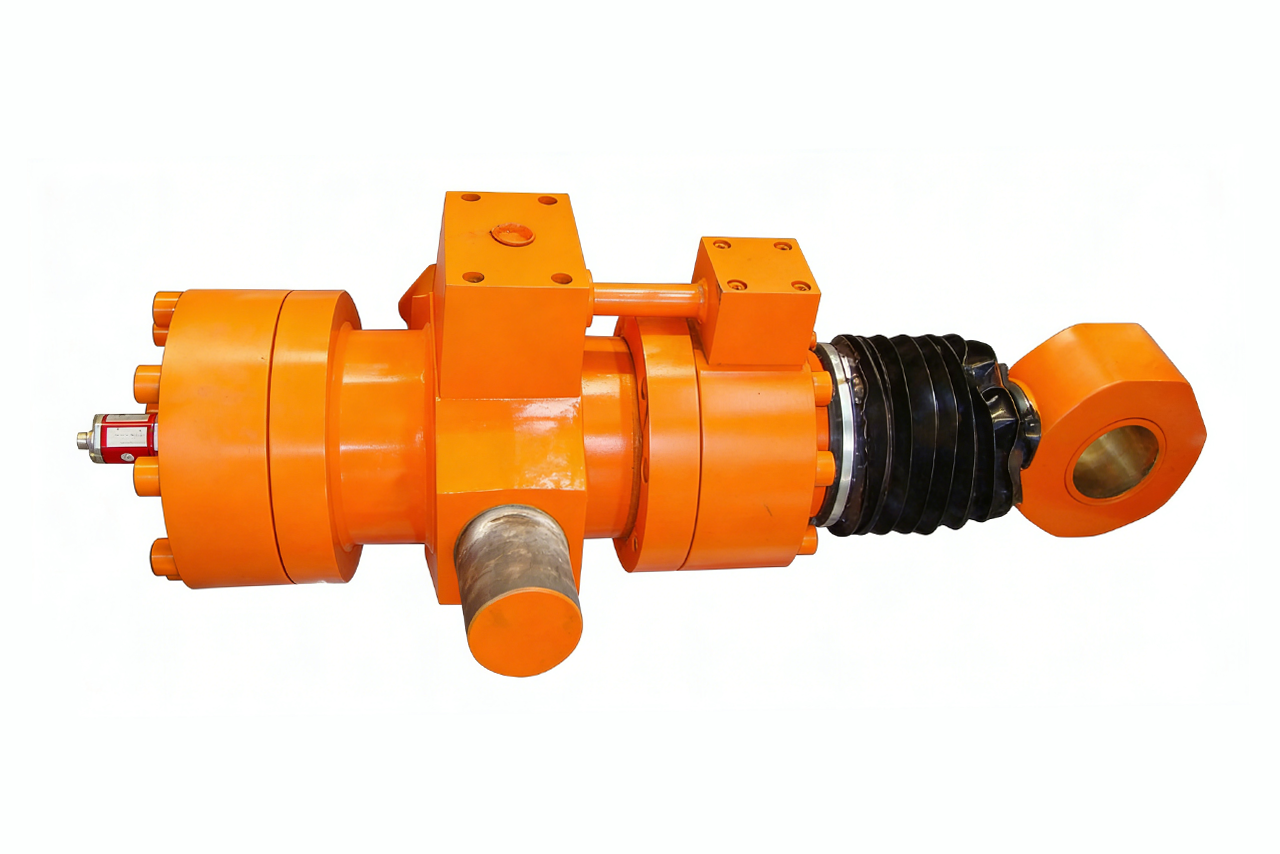
In modern industrial equipment, hydraulic cylinders are more than just force-generating components—they are part of a precision-controlled system. Whether used in construction machinery, hydraulic presses, or automation lines, their performance depends heavily on the design of the hydraulic control system.
For B2B buyers, understanding this system is essential for selecting the right solution, improving efficiency, and reducing long-term maintenance costs.
What ">What Is a Hydraulic Control System?
A hydraulic control system is a closed-loop system with negative feedback, designed to regulate force, speed, and position with high accuracy.
In simple terms, it continuously compares the desired output with the actual output—and automatically adjusts to eliminate errors.
This is what enables hydraulic cylinders to deliver stable, precise, and repeatable motion.
Key Components of a Hydraulic Control System
A typical hydraulic control system consists of seven core components:
1. Input Element (Command Signal)
This is where the system receives instructions, such as speed, position, or force requirements.
- Examples: PLC systems, control panels, automated signals
- Function: Defines what the system should do
2. Feedback Measurement Element
This component monitors the actual output and converts it into a feedback signal.
- Examples: pressure sensors, position sensors, encoders
- Function: Provides real-time system data
3. Comparison Element
The system compares the input signal with the feedback signal to detect any deviation.
- Output: error signal
- Function: Ensures accuracy through continuous correction
4. Amplification & Conversion Element (Core Unit)
This is the “control center” of the system.
- Function: amplifies the error signal and converts it into hydraulic signals (flow or pressure)
- Common components: servo valves, proportional valves
This directly determines the responsiveness and precision of the hydraulic cylinder.
5. Actuator (Hydraulic Cylinder)
The actuator converts hydraulic energy into mechanical motion.
- Function: executes movement (linear force and displacement)
- Key role: delivers actual work output
6. Controlled Object (Load)
This refers to the machine or structure being controlled.
- Examples: presses, lifting systems, industrial equipment
7. Hydraulic Power Unit (HPU)
The energy source of the system.
- Components: motor, pump, tank, filters, cooling system
- Function: provides stable hydraulic pressure
Advantages of Hydraulic Control Systems
High Power Density
Hydraulic systems provide strong output force in a compact size, making them ideal for heavy-duty applications.
Fast Response Time
Hydraulic cylinders react quickly to control signals, improving productivity and efficiency.
High Precision and Stability
Thanks to closed-loop control, hydraulic systems maintain consistent performance even under changing loads.
This is critical for industries requiring accurate positioning and repeatability.
Compact System Design
Hydraulic systems can be integrated into tight spaces without sacrificing performance.
Limitations You Should Consider
Sensitive to Oil Contamination
Precision components require clean hydraulic oil.
Poor filtration can lead to system failure and higher maintenance costs.
Temperature Impact
Oil temperature changes can affect viscosity and system performance.
Risk of Leakage
Improper sealing or wear can cause oil leaks, leading to environmental and operational issues.
Higher Initial Cost
High-precision hydraulic components increase upfront investment.
Less Efficient for Long-Distance Transmission
Compared to electrical systems, hydraulic energy is harder to transmit over long distances.
How to Choose the Right Hydraulic Cylinder System
For B2B buyers, selecting the right hydraulic solution involves more than just force requirements. Consider the following:
- Control accuracy: Do you need servo-level precision or standard control?
- Operating environment: High temperature, dust, or heavy load?
- Maintenance capability: Can your system support high oil cleanliness standards?
- System integration: Compatibility with automation or smart control systems
A well-matched system improves not only performance—but also ROI and service life.
Industry Trend: Smarter Hydraulic Systems
With the rise of Industry 4.0, hydraulic systems are evolving toward:
- Electro-hydraulic integration
- Real-time monitoring (IoT)
- Intelligent diagnostics
- Energy-efficient designs
This means hydraulic cylinders are no longer just mechanical components—they are becoming smart, connected actuators.
A hydraulic control system is the backbone of hydraulic cylinder performance. Understanding its structure and characteristics helps businesses:
- Improve operational efficiency
- Reduce downtime
- Make smarter purchasing decisions
For B2B buyers, the key is clear:
Choose not just a ">hydraulic cylinder—but a complete, well-engineered control solution.


Shi Bang Machinery benefits from a superior, convenient location that enables smooth transportation. Guided by its "Credibility First, Customers Supreme" mission, it provides qualified products. Backed by full-process quality control, the enterprise upholds its commitment to reliable quality, timely delivery, reasonable pricing, and excellent service while working to establish an influential industry brand.
Copyright © 2026 无锡市世邦机械制造有限公司 Ltd. All Rights Reserved. POWERED BY WEIMOBTRADE
