Hydraulic Cylinder Rod Buckling: How to Size Long-Stroke Cylinders Safely
News Details
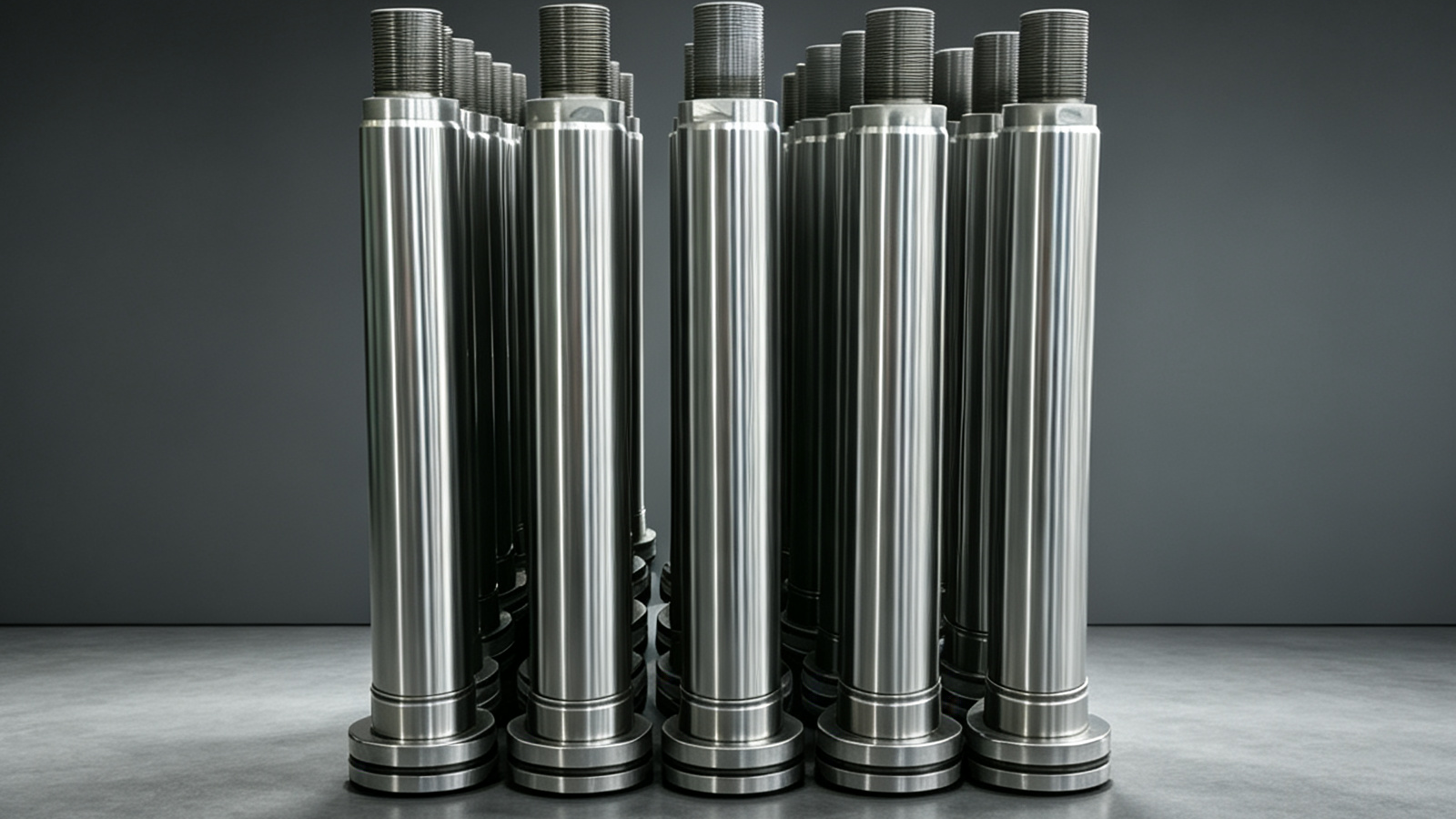
Heavy machinery depends on steady fluid power to lift, push, and position massive loads. However, when designing equipment with extended reach, engineers often run into a serious mechanical risk: rod buckling.
A long stroke hydraulic cylinder operating under high compressive loads behaves like a slender column. If the force exceeds a critical limit, the rod can instantly bow or snap. A bent cylinder rod causes fluid leaks, seal failure, total mechanical lockup, and expensive downtime.
To keep your systems working reliably, you must size your components correctly from the start. Here is a clear guide on how buckling happens, how to perform a hydraulic cylinder rod buckling calculation, and best practices to size long-stroke equipment safely.
What CausesHydraulic Cylinder Rod Buckling?
Buckling is not a material yield failure caused by tension. Instead, it is a structural stability failure caused by compression.
When you push fluid into the cap end of a cylinder, force transfers straight down the piston rod. If the rod is short and thick, it will withstand huge forces up to the yield strength of the steel. But as stroke length increases relative to rod diameter, the rod becomes vulnerable to sideways deflection.
Several factors increase the risk of rod bending:
-
Excessive Stroke Length: Longer rods flex much easier under load.
-
Small Rod Diameters: Under-sizing the rod shaft reduces its resistance to bending.
-
Side Loads: Unaligned forces or machine play push the rod sideways, initiating a bend.
-
Improper Mounts: Pin-clevis or spherical mounts allow movement that increases the effective column length.
How to Perform a Hydraulic Cylinder Rod Buckling Calculation
Engineers rely on classical column buckling formulas to determine the maximum safe push load (Pcr). The most common approach uses Euler's Buckling Formula for long slender columns.
1. The Basic Euler Formula
For long, thin rods where elastic buckling occurs, the critical load formula is:
Pcr = (π² × E × I) / Lk²
Where:
-
Pcr = Critical buckling load (the maximum force before collapse)
-
E = Modulus of elasticity of the rod material (e.g., steel is around 210,000 MPa)
-
I = Area moment of inertia of the rod cross-section ( (π × d⁴) / 64 )
-
Lk = Effective column length (stroke adjusted by mounting factor)
2. Factoring in Mounting Styles (Lk)
Mounting conditions change how a cylinder handles compressive forces. You must multiply the actual extended length by a stroke factor (k) to find the effective length (Lk):
-
Fixed Base, Free End: k = 2.0 (highest risk of bending)
-
Pivot Ends (Pin-Cleve on both ends): k = 1.0 (standard industrial setup)
-
Fixed Base, Guided/Pivoted End: k = 0.7
-
Fixed on Both Ends: k = 0.5 (strongest structural support)
3. Applying Safety Factors
Never operate a cylinder right at its critical load. Designers typically apply a safety factor (Sf) between 2.0 and 3.5.
Safe Working Load = Pcr / Sf
If your working pressure pushes the cylinder beyond this safe working load, your rod is highly likely to bend.
Practical Steps to Prevent Bent Cylinder Rods
If your calculations show that your planned cylinder will buckle, you do not always need to redesign your entire machine. You can use several engineering strategies to stabilize long strokes:
Upgrade Material Strength and Diameter
Increasing the rod diameter (d) significantly improves stiffness because the moment of inertia (I) scales to the fourth power of the diameter. Using high-tensile material also helps prevent permanent deformation. High-quality shafting, such as High-Precision Hard Chrome Plated Piston Rods, ensures high yield strength, straightness, and uniform outer surface resistance against heavy operational wear.
Install Stop Tubes
A stop tube is a metal collar placed inside the cylinder on the rod side of the piston. It prevents the piston from extending all the way to the cylinder head. By keeping distance between the piston bearing and the guide bush, the stop tube provides better internal support, reducing side movement and lowering effective length.
Choose Better Mounting Methods
Whenever possible, avoid mounting cylinders with free ends or long overhanging pins. Use rigid trunnion mounts near the cylinder head or fixed flange mounts to shorten the effective column distance.
Need Custom Long-Stroke Hydraulic Solutions?
Sizing hydraulic components for high-tonnage or long-stroke applications requires precise engineering calculations and high-grade materials. Using weak or unverified shafting leads to expensive field failures and mechanical downtime.
At Shellppon Hydraulic, we manufacture precision-engineered, induction-hardened, and chrome-plated shafts designed to handle demanding industrial loads without flexing or failing.
If you are currently designing a new hydraulic system or need assistance verifying your cylinder rod calculations,Contact Us today to talk directly with our technical engineering team.


