
What Is a Swing Hydraulic Cylinder?
A swing hydraulic cylinder, also known as a rotary hydraulic actuator or swing hydraulic motor, is a key hydraulic component that converts hydraulic energy into mechanical motion.
Unlike standard cylinders, it does not produce linear movement. Instead, it delivers reciprocating rotary (swing) motion through its output shaft. As a result, it can directly drive loads without additional gearboxes or reducers.
Because of this simple yet powerful function, swing hydraulic cylinders are widely used in modern industrial systems and high-end equipment.
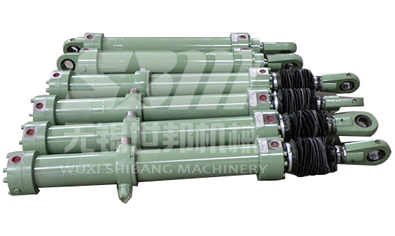
Swing Hydraulic Cylinder Structure: Types and Working Principles
To better understand swing hydraulic cylinder structure, it is helpful to look at the three main types. Each type fits different working conditions and performance needs.
1. Vane Type Swing Hydraulic Cylinder
The vane type swing hydraulic cylinder is one of the most compact designs.
Key features:
- Simple and compact structure
- Small axial size and light weight
- Easy installation
- High mechanical efficiency
Variants:
- Single vane: swing angle up to 310°
- Double vane: higher torque output
However, it requires high sealing precision, which increases manufacturing complexity.
2. Rack and Pinion Swing Hydraulic Cylinder
The rack and pinion swing hydraulic cylinder is widely used for applications requiring stable motion and high torque.
Key features:
- Smooth transmission
- Easy sealing design
- High positioning accuracy
- Swing angle up to 720°
In addition, it offers a wide torque range, with some models reaching over 100,000 N·m, making it ideal for heavy-duty applications.
3. Helical (Spiral) Piston Swing Hydraulic Cylinder
The helical piston swing hydraulic cylinder uses a spiral mechanism to convert linear motion into rotation.
Key features:
- Compact and sealed structure
- Strong resistance to dust and contamination
- Suitable for high-pressure environments
- Can operate in extreme conditions, including deep-sea applications
Therefore, it is often used in harsh industrial environments.
Key Advantages of Swing Hydraulic Cylinders
Compared with traditional mechanical transmission systems, swing hydraulic cylinders offer several clear advantages.
1. High Torque Output in Compact Space
They can deliver large torque without requiring bulky gear systems.
2. Precise Control and Stability
They provide accurate motion control, even at low speeds.
For example, some models can maintain stable motion at 0.002–0.003 rad/s, which is ideal for precision equipment.
3. Improved Sealing and High Pressure Resistance
Modern designs support working pressures up to 25 MPa, and in some cases even 30 MPa.
4. Strong Environmental Adaptability
They can operate in:
- High temperature
- High pressure
- Dusty or contaminated environments
5. Energy Efficiency and Easy Maintenance
With fewer mechanical components, they reduce energy loss and simplify maintenance.
Swing Hydraulic Cylinder Applications Across Industries
Thanks to their versatility, swing hydraulic cylinders are used in a wide range of industries.
1. Construction Machinery
- Excavator bucket positioning
- Concrete pump truck discharge control
- Crane boom swing
Their high torque ensures stable and efficient operation.
2. Metallurgy and Petrochemical Industry
- Steel ladle tilting systems
- Rolling mill rotary arms
- Petrochemical equipment motion control
They provide reliable performance under high loads and temperatures.
3. Special and Defense Applications
- Naval radar stabilization platforms
- Torpedo launch systems
- Artillery loading systems
In extreme projects, such as deep-sea operations, swing hydraulic cylinders play a critical role due to their durability and precision.
4. Industrial Automation and Manufacturing
- Automotive production lines
- Refrigerator assembly systems
- Robotics and material handling
- Food and pharmaceutical processing equipment
They help improve automation efficiency and positioning accuracy.
How to Select the Right Swing Hydraulic Cylinder
Choosing the correct model is essential for performance and longevity.
Key Selection Factors:
1. Swing Angle
- Large angle → choose rack and pinion type
- Limited space → choose vane type
2. Working Pressure
Ensure the cylinder meets system pressure requirements.
3. Output Torque
Select based on load and application demands.
4. Installation Space
Compact designs are better for tight environments.
Maintenance Tips for Swing Hydraulic Cylinders
To ensure long-term performance, proper maintenance is necessary.
Best Practices:
- Regularly inspect seals for wear
- Replace damaged sealing components promptly
- Keep hydraulic oil clean and contamination-free
- Monitor system pressure and performance
By following these steps, you can reduce internal leakage and extend service life.


Copyright © 2026 无锡市世邦机械制造有限公司 Ltd. All Rights Reserved. POWERED BY WEIMOBTRADE
