In the context of ongoing technological upgrades across construction machinery and special vehicle equipment, telescopic hydraulic cylinders (also known as multistage hydraulic cylinders) are increasingly recognized as critical actuation components. With their long stroke, high load capacity, and compact design, these cylinders are becoming indispensable in modern heavy equipment. As market demand for higher machine performance, safety, and space efficiency continues to grow, the technical standards and application depth of telescopic hydraulic cylinders are also advancing.
Technical Advantages & Key Parameters: Beyond Simple Stroke Ratios
Telescopic hydraulic cylinders achieve extended travel through a multi-stage nested barrel structure. Their core technical benefits include:
📌 High Extension Ratio Design
A fully retracted telescopic cylinder may occupy only 20%–40% of its total extended length, making it ideal for space-constrained installations. Typical extension ratios range from 3:1 to 6:1, with high-end designs exceeding 8:1.
📌 Pressure & Load Capacity
Industry-standard operating pressures typically fall between 200–280 bar (2900–4060 psi). Some high-performance models operate up to 3000 psi (≈206 bar), ensuring reliable operation under demanding loads.
📌 Stage Count & Stroke Length
Telescopic cylinders generally include 2–6 nested stages, tailored to application-specific stroke requirements. Common extended strokes range from several meters to over ten meters.
These key parameters clearly highlight the space utilization efficiency and heavy-duty adaptability of telescopic hydraulic cylinders—both essential for construction machinery and special vehicle applications.
Core Applications: Beyond “Lifting” to Smart Control and System Integration
Telescopic hydraulic cylinders are widely used across equipment categories that demand compact long stroke solutions, high load handling, and precise control. As hydraulic control systems become more intelligent, application requirements continue to evolve:
Construction Machinery
-
Dump truck bed lifting
-
Crane telescopic booms
-
Concrete pump booms
Benefit: Long stroke in limited space solves traditional long-cylinder installation challenges.
Specialty Vehicles
-
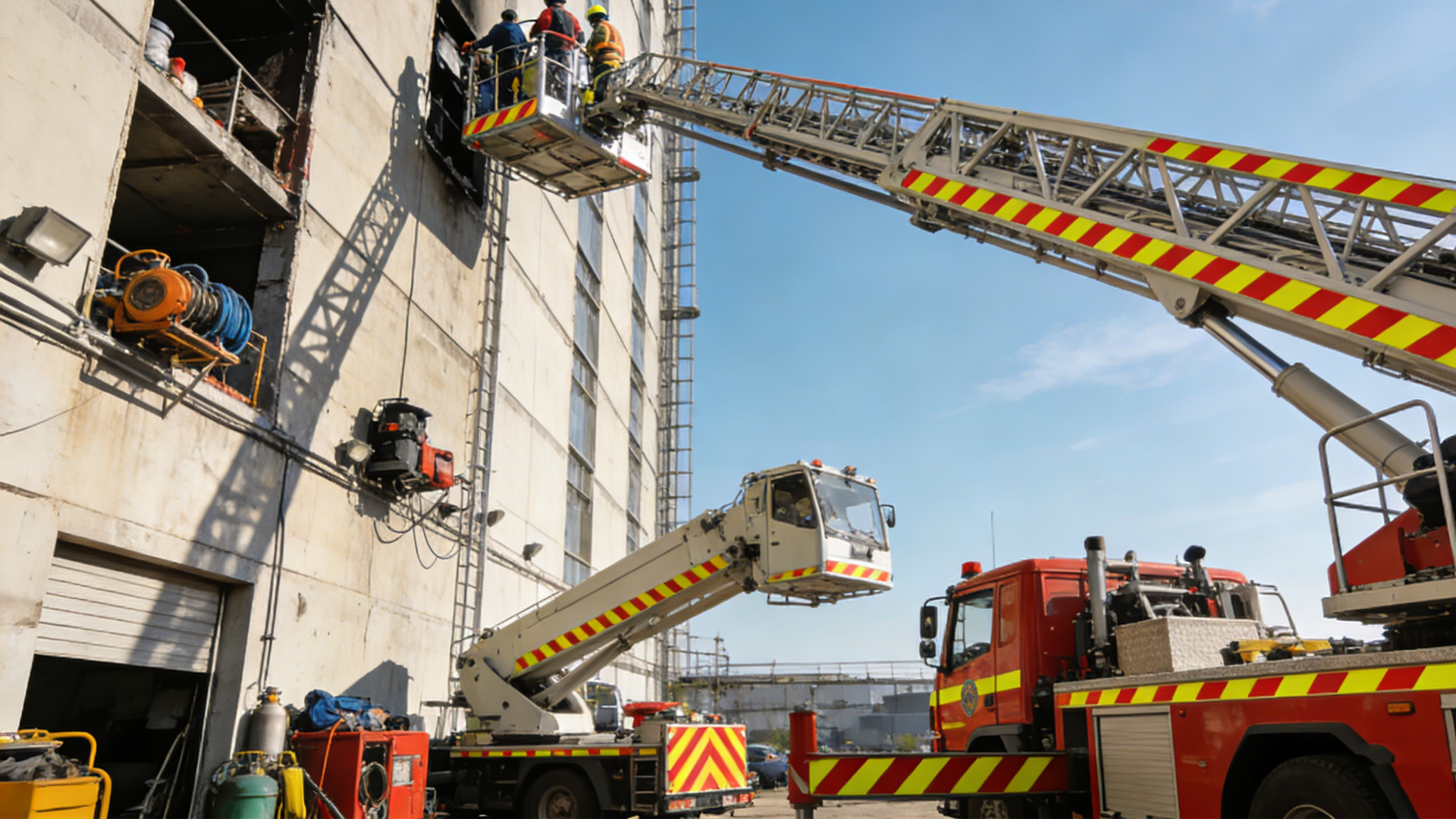
Fire truck ladder extension
-
Aerial work platforms
-
Waste compactor lift systems
Benefit: High load capacity and precise motion control enhance operational stability and safety.
Industrial Automation & Large Equipment
-
Press and injection molding die adjustments
-
Port and shipyard hydraulic lift systems
Benefit: High durability and customizable parameters support complex industrial environments.
Industry Trend: Intelligent Control & System-Level Collaboration
As intelligent hydraulic control systems and mechanical–electrical integration technologies mature, the role of telescopic hydraulic cylinders is expanding beyond basic actuation to system-level performance enhancement:
-
Automated Control Integration
By integrating sensors and proportional/servo valves, full dynamic control enables higher precision and synchronized extension/retraction. -
Energy Efficiency & Reliability Improvements
Optimized sealing systems and advanced surface treatments extend service life and reduce energy consumption. -
Modular & Standardized Design
Modular design allows OEMs and system integrators to quickly match cylinders to multiple vehicle platforms and operational conditions, improving manufacturing and maintenance efficiency.
These trends not only showcase technological advancement but also reflect the industry’s shift toward high-efficiency, intelligent, and green manufacturing.
Telescopic Hydraulic Cylinders Are Becoming Standard, Not Optional
For construction machinery and special vehicle manufacturers, telescopic hydraulic cylinders are no longer just a long-stroke solution—they are a key performance enabler that enhances overall equipment capability, optimizes machine packaging, and improves automated control.
As industry standards rise and intelligent applications deepen, telescopic hydraulic cylinders are positioned to play a larger role in system-level performance optimization, pushing heavy equipment toward smarter, safer, and more efficient operation.


