Rack and Pinion Rotary Cylinders and Slewing Bearings in Truck Mounted Cranes
News Details
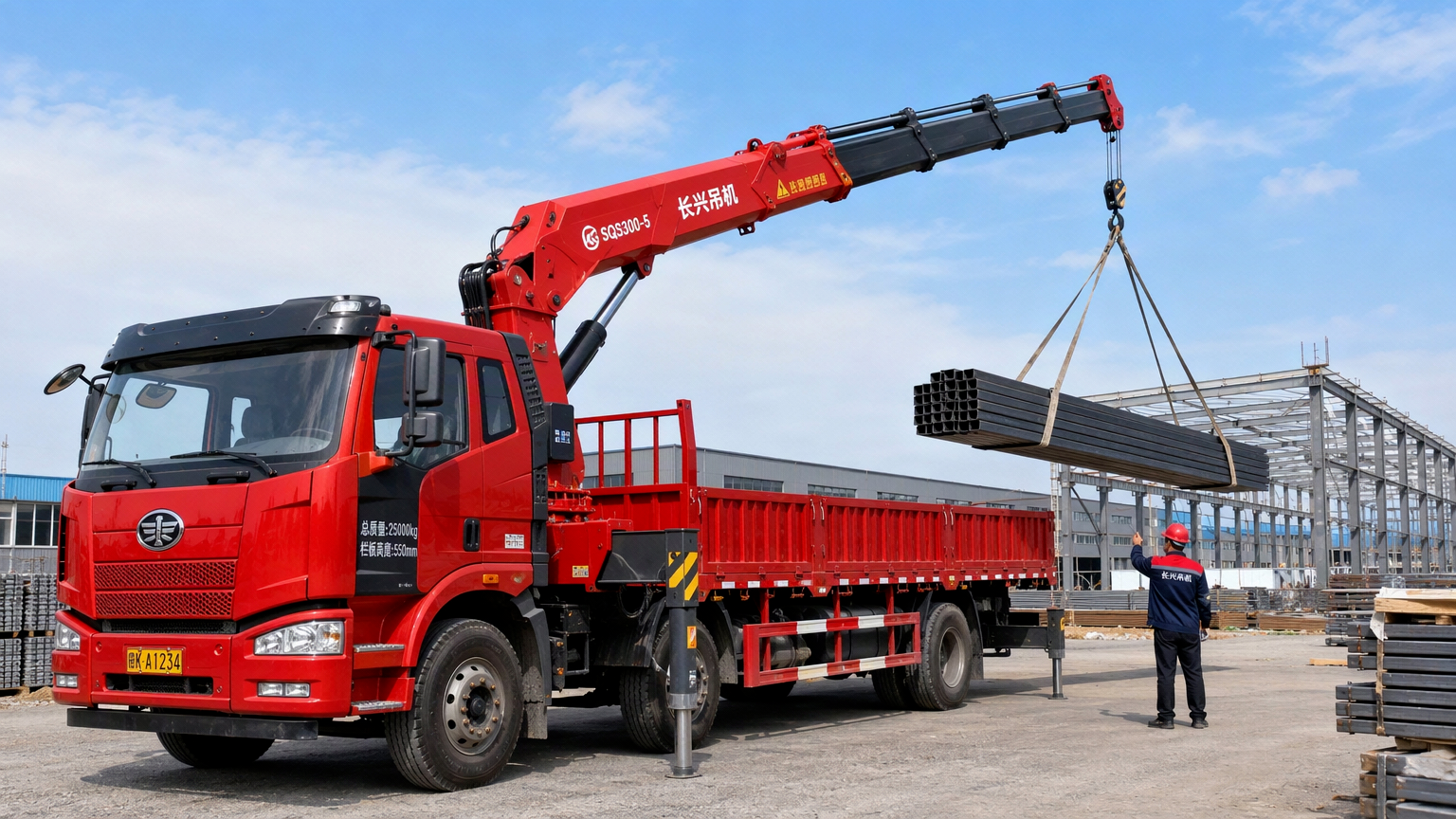
A truck-mounted crane needs both turning force and strong support to move a load around the vehicle. In some small and medium knuckle boom cranes, a rack-and-pinion rotary cylinder provides the turning force. Meanwhile, a slewing bearing supports the rotating upper structure and transfers lifting loads to the base.
These parts work together, but their jobs differ. Understanding that difference helps with component selection, fault checks, and daily care.
How Does a Rack-and-Pinion Rotary Cylinder Work?
A rack-and-pinion rotary cylinder turns hydraulic pressure into rotary motion.
First, pressurized oil pushes a piston connected to a toothed rack. As the rack moves in a straight line, its teeth engage a pinion. The pinion then turns the crane’s rotating column or upper structure through the output connection.
Reversing the oil flow moves the rack in the opposite direction. As a result, the crane can slew left or right.
The rack has a fixed stroke, so rotation is limited. Depending on the design, the available angle may be around 270° to 400°. Even a unit with more than 360° of travel must eventually reverse; it cannot keep turning continuously.
What Does the Rotary Cylinder Do?
The rotary cylinder supplies torque to move the boom, column, and attached equipment around the crane’s base. This lets the operator place a load beside the truck or move it between working positions.
Its main functions include:
- Generating slewing torque: Hydraulic force becomes the torque needed to turn the upper structure.
- Controlling movement: The directional valve selects left or right rotation, while flow control helps set speed.
- Supporting fine positioning: Suitable valve control and well-adjusted gear engagement allow small, controlled movements.
- Fitting compact spaces: An integrated actuator can reduce the space needed for a separate motor and gearbox.
However, the gear mechanism is not mechanically self-locking. Position holding depends on the hydraulic circuit, seal condition, and any fitted brake or holding device.
A suitable dual counterbalance valve arrangement can help control externally driven motion and reduce drift. Valve selection and settings must match the crane’s design.
What Does the Slewing Bearing Do?
The slewing bearing forms the rotating joint between the crane’s upper structure and its fixed base.
A crane slewing bearing is designed to carry combined loads:
- Axial load: Force acting along the rotation axis.
- Radial load: Force acting across the rotation axis.
- Overturning moment: The tilting effect created by the load and boom reach.
It also guides rotation and helps maintain alignment.
In a design with a separate slewing bearing, the bearing and its bolted connections form the main path for lifting loads. These forces then pass through the crane base, subframe, and vehicle support system.
The rack-and-pinion drive mainly supplies slewing torque. However, its teeth and shaft still experience gear forces. Poor alignment or excess structural movement can increase those forces and damage the drive.
Some cranes use a column and bushings instead of a separate slewing ring. Therefore, always confirm the actual support arrangement from the crane drawings.
Why Use This Combination on a Knuckle Boom Crane?
A rack-and-pinion actuator with a suitable bearing arrangement offers a compact solution for limited-angle slewing.
The short drive path can provide direct response. In addition, a well-designed system can deliver smooth starts, controlled reversals, and useful low-speed positioning.
These features suit jobs such as:
- Tree planting and landscape work.
- Utility maintenance.
- Municipal lifting tasks.
- Loading and unloading in narrow work areas.
The system may also have fewer drive components than a separate motor-and-gearbox arrangement. However, total cost and service needs depend on the actuator size, controls, and duty cycle.
Smooth motion and low backlash are design outcomes, rather than automatic features of every rack-and-pinion unit.
Rack-and-Pinion Drive vs. Hydraulic Motor Drive
| Feature | Rack-and-pinion rotary cylinder | Hydraulic motor and slewing gearbox |
| Rotation | Limited by rack stroke | Can support continuous rotation |
| Layout | Compact, often integrated | Separate motor and reduction gear |
| Main use | Limited-angle positioning | Repeated or continuous slewing |
| Holding control | Hydraulic holding circuit; brake if specified | Commonly uses a brake and hydraulic controls |
| Key concern | End-of-stroke impact and gear wear | Brake, gearbox, and drive wear |
Continuous rotation also requires suitable hose routing or rotary unions, plus electrical slip rings where needed. A hydraulic motor alone does not make the whole crane capable of unlimited rotation.
Likewise, crane capacity alone does not determine the best drive. Required torque, reach, operating speed, space, and working cycle all matter.
Common Faults and Their Possible Causes
Slewing drift after stopping
Possible causes include piston seal leakage, leakage through the control or holding valves, and incorrect valve settings. External torque may come from wind, vehicle tilt, or load movement.
Noise, jerking, or tight spots
Check for poor lubrication, damaged bearing raceways, loose mounting bolts, and uneven gear engagement. Worn rack guides can also allow the rack to move out of alignment.
Weak rotation under load
Low supply pressure, internal leakage, excess return pressure, or a restricted valve can reduce output torque. Increased bearing friction may also make the crane hard to turn.
Heavy impact near the travel limit
Fast operation, failed cushioning, incorrect cushion adjustment, or damaged stops may cause a hard impact. Depending on the circuit, blocked cushion passages can also create abnormal pressure.
Chipped or broken teeth
Shock loading, repeated end-stop impacts, poor tooth contact, or loose structural connections can overload the gear teeth.
External oil leaks
Inspect end-cover seals, shaft seals, fittings, and hoses. A rack-and-pinion actuator does not always have an exposed piston rod, so leak points vary by design.
These symptoms can share several causes. Confirm the fault with the manufacturer’s inspection procedure before replacing parts.
Daily Checks and Maintenance
Start with the bearing mounts and other load-carrying connections. Inspect bolts at the stated service intervals, using the manufacturer’s specified method and preload requirements. Repeated tightening without a defined procedure can damage fasteners.
Next, lubricate the bearing and gear surfaces where required. Use the specified grease and avoid introducing dirt.
Also check:
- Hoses, fittings, covers, and seals for leaks.
- Bearing play and changes in gear backlash.
- Stops, angle sensors, and cushioning devices.
- Unusual noise or uneven movement during an approved functional check.
- Position holding under the conditions defined in the service manual.
Lower and secure the load, then isolate stored hydraulic energy before repair work. Any loaded holding test should follow the crane manufacturer’s procedure.
Choosing a Rotary Cylinder for Your Crane
Selection starts with the required slewing torque and travel angle. Then check working pressure, available flow, mounting space, shaft connection, duty cycle, and expected external loads.
The support system also needs separate checks for bearing capacity, bolt loading, and mounting stiffness. Crane tonnage by itself is not enough to size either component.
Shellppon Hydraulic provides hydraulic cylinder solutions and rotary actuator components. For a project discussion, share your drawings, required torque, rotation angle, pressure, and mounting details through the Shellppon Contact Us page.


