Heavy-Duty Hydraulic Cylinder Buying Guide: Load, Pressure, Stroke and Duty Cycle
News Details
Selecting the right heavy duty hydraulic cylinder is crucial for severe industrial and mobile operations. When machinery operates in harsh mining environments, construction sites, or heavy manufacturing plants, system failure leads to expensive downtime. Therefore, engineers and procurement managers must evaluate several core parameters before making a purchase decision.
This buying guide breaks down the four most critical factors—load, pressure, stroke length, and duty cycle. Understanding these technical specifications ensures your equipment operates with maximum efficiency, safety, and durability.
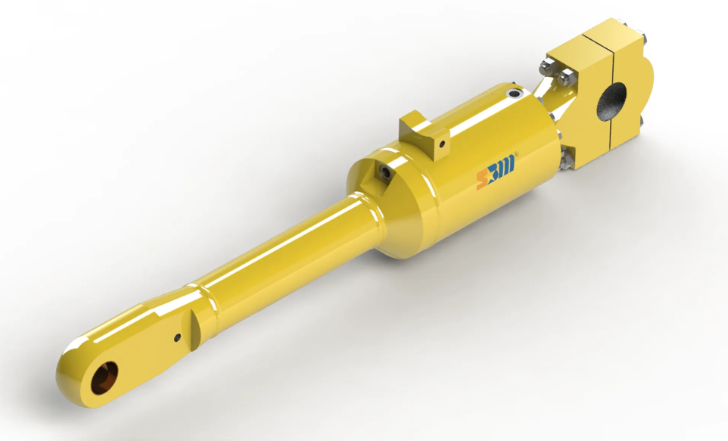
1. Calculating Load Capacity and Force Requirements
First, you must determine the exact amount of force required to move, lift, or hold your target load. The load capacity of a hydraulic cylinder directly depends on the internal piston area and the working pressure of the system.
To calculate the output force during extension, use the basic force formula:
Force = Pressure * Piston Area
However, you should always add a safety margin of 20% to 30% above your maximum calculated load. This extra cushion accounts for friction, mechanical losses, and unexpected pressure spikes.
When your application demands immense lifting or pushing force, standard cylinders are often insufficient. In these cases, upgrading to a large bore hydraulic cylinder provides the necessary surface area to generate high force without exceeding safe pressure thresholds.
2. Choosing Operating Pressure and System Rating
Operating pressure defines how much power your hydraulic system can deliver safely over long periods. Standard industrial cylinders typically operate between 1,500 PSI and 3,000 PSI (100 to 210 bar). However, heavy-duty applications demand much higher performance.
For heavy construction, earthmoving, and mining machinery, you will often need a high pressure hydraulic cylinder capable of handling 5,000 PSI (350 bar) or higher.
Key benefits of high-pressure systems include:
-
Compact Footprint: Higher pressure allows you to achieve the same force using a smaller piston diameter.
-
Faster Response: Reduced fluid volume leads to quicker actuator response times.
-
Enhanced Structural Integrity: High-pressure cylinders feature reinforced walls, heavy flange mounts, and premium seal packages to prevent leaks.
Always verify that your pumps, valves, hoses, and fittings match the pressure rating of your chosen cylinder.
3. Determining Stroke Length and Preventing Rod Buckling
Stroke length is the total distance the piston rod travels from fully retracted to fully extended. While specifying the stroke length might seem straightforward, long-stroke applications introduce mechanical risks—primarily rod buckling or bending.
When a cylinder extends under heavy compressive loads, the rod acts as a column. As a result, longer strokes require thicker rod diameters or stop tubes to prevent physical failure.
To select the correct stroke:
-
Measure Working Distance: Define the exact range of motion your mechanism requires.
-
Check Column Stability: Use Euler column formula or consult manufacturer buckling charts for long strokes (typically over 40 inches or 1,000 mm).
-
Consider Stop Tubes: Internal stop tubes increase the distance between the piston and rod bearing, reducing side-load stress when extended.
4. Understanding Duty Cycle and Thermal Performance
Duty cycle describes how frequently and intensely the cylinder operates during a work shift. A machine running continuously 24/7 demands vastly different component specifications than equipment used intermittently for a few minutes each hour.
High duty cycles generate continuous friction between seals, bearings, and cylinder walls. Consequently, system temperatures rise, which can degrade hydraulic fluid and destroy standard seals.
To ensure long operational life under high duty cycles:
-
Select Premium Seals: Use polyurethane or Viton seals capable of withstanding elevated temperatures and continuous friction.
-
Optimize Heat Dissipation: Ensure your hydraulic reservoir and cooling system maintain fluid temperatures within optimal limits.
-
Specify Hardened Materials: Chrome-plated or induction-hardened piston rods resist wear and scoring over millions of cycles.
5. Mounting Options and Custom Configurations
Even the strongest cylinder will fail prematurely if mounted incorrectly. Side loading is one of the leading causes of seal wear and rod bending. Therefore, selecting the correct mounting style is essential for aligning the cylinder with the load path.
Common heavy-duty mounting styles include:
-
Clevis Mounts: Allow pivot movement along a single plane, ideal for movable arms and linkages.
-
Trunnion Mounts: Reduce bending moments by supporting the cylinder near its center of gravity.
-
Flange Mounts: Provide rigid, fixed attachment for straight-line pushing or pulling applications.
If off-the-shelf options do not meet your exact dimensions or load specifications, working with an experienced manufacturer allows you to customize port locations, rod coatings, and mounting geometry.
Get Expert Guidance for Your Hydraulic Actuators
Selecting the perfect cylinder requires balancing load demands, operating pressure, stroke safety, and duty cycles. By carefully evaluating each factor, you ensure reliable operation, minimal maintenance, and long service life for your machinery.
Need specialized engineering support or custom manufacturing? If you are looking for tailor-made solutions for earthmoving machinery or industrial automation, contact our engineering team today to discuss your project requirements.


