
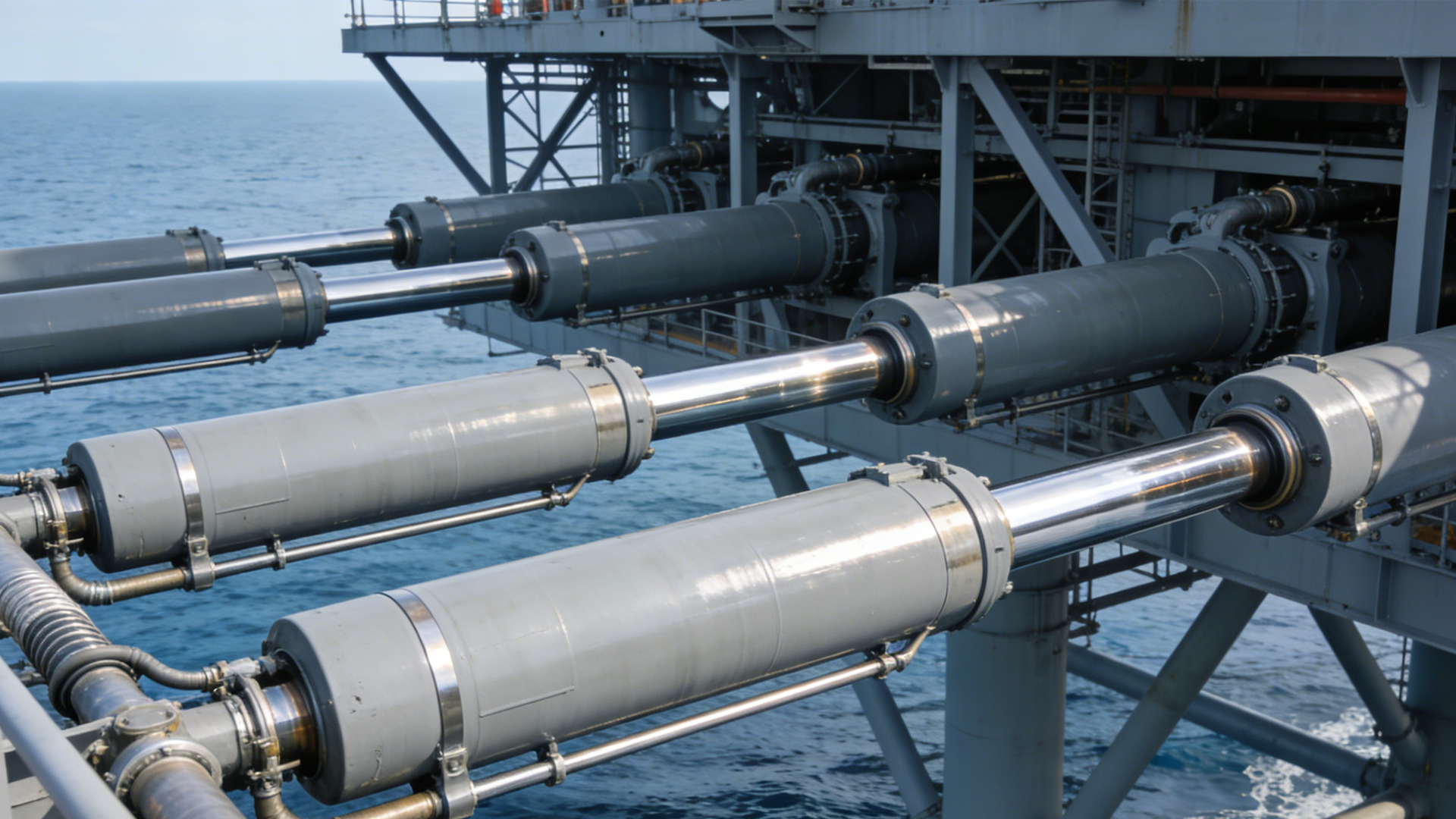
Heavy duty hydraulic cylinders play a critical role in industries such as mining equipment, steel manufacturing, hydraulic presses, offshore engineering, and large-scale construction machinery. These applications demand extremely high force output, reliability, and durability under harsh working conditions.
Understanding the key performance parameters of heavy duty hydraulic cylinders helps engineers and equipment manufacturers select the right model, improve system efficiency, and prevent unexpected failures.
This article explains the core specifications, structural parameters, material choices, and precision indicators that define the performance of heavy duty hydraulic cylinders.
Pressure and Force Output Parameters (Core Indicators)
The most important specifications of a heavy duty hydraulic cylinder are working pressure and output force, which determine whether the cylinder can handle heavy loads in demanding environments.
Rated Working Pressure
Heavy duty hydraulic cylinders typically operate at significantly higher pressures than standard cylinders.
Typical ranges include:
- Rated working pressure: ≥ 21 MPa
- Common heavy-duty applications: 21–35 MPa
- Ultra-high pressure models: above 35 MPa
Higher working pressure allows the cylinder to generate greater force while maintaining a compact structure.
Output Force Calculation
The theoretical output force of a hydraulic cylinder is calculated using the formula:
F = P × A
Where:
- F = Output force
- P = Hydraulic pressure
- A = Effective piston area
In practical applications, system efficiency must be considered. Engineers usually apply a correction coefficient of 0.92–0.96 to account for mechanical and hydraulic losses.
Typical heavy-duty cylinders provide:
- Rated thrust: ≥ 200 kN
To ensure operational safety, engineers normally reserve 20–30% additional force capacity to handle unexpected load spikes.
Structural Dimension Parameters
Structural design directly affects the strength, stability, and durability of heavy duty hydraulic cylinders.
Cylinder Bore Diameter
The cylinder bore diameter determines the piston area and therefore directly influences the output force.
Larger bore sizes generate higher thrust, making them suitable for heavy industrial equipment such as:
- hydraulic presses
- mining machinery
- steel mill equipment
Piston Rod Diameter
For heavy-duty applications, the piston rod must provide sufficient resistance against bending and buckling.
Typical design ratio:
Piston rod diameter = 0.7 – 0.8 × cylinder bore
If the cylinder operates under side loads or eccentric forces, the rod diameter must be increased to enhance rigidity.
Stroke Length
Heavy duty hydraulic cylinders often require long stroke movement.
Typical specifications include:
- Standard long stroke: ≥ 1000 mm
- Extra long stroke: over 2000 mm
When the stroke exceeds 2 meters, additional guide supports or stabilizing structures are usually required to prevent rod deflection.
Cylinder Wall Thickness and Rod Straightness
Key structural parameters also include:
- cylinder barrel wall thickness
- piston rod straightness
- structural rigidity
These factors determine the cylinder's ability to resist deformation under extreme pressure.
Materials and Sealing System Parameters
Material selection significantly affects strength, wear resistance, corrosion resistance, and service life.
Cylinder Barrel Materials
Common materials include:
- High-strength carbon steel with internal surface treatment
- Stainless steel for corrosion-resistant applications
Internal honing and surface hardening improve wear resistance and sealing performance.
Piston Rod Materials
Typical piston rod materials include:
- Quenched and tempered 45# steel
- High-strength alloy steel
- Super duplex stainless steel for marine or corrosive environments
These materials provide excellent strength and fatigue resistance.
Seal Materials
Seal selection must match the working environment and pressure conditions.
Common seal materials include:
- NBR (Nitrile Rubber) – general-purpose applications
- FKM (Fluorocarbon Rubber) – high temperature resistance
- PU / PTFE – suitable for high-pressure heavy load systems
Proper sealing design prevents oil leakage, improves efficiency, and extends cylinder lifespan.
Protection Level
In harsh environments such as offshore platforms or outdoor machinery, cylinders must meet higher protection standards.
Typical requirement:
Protection rating ≥ IP67
This ensures resistance to dust, moisture, and harsh environmental exposure.
Precision and Working Condition Adaptability
In many heavy industrial applications, hydraulic cylinders must provide both high force and high precision.
Positioning Accuracy
High precision heavy duty cylinders can achieve:
Repeat positioning accuracy within ±0.1 mm
This level of precision is essential for equipment such as:
- servo hydraulic presses
- automated forming machines
- precision lifting systems
Internal Leakage Control
Low internal leakage is critical for maintaining system pressure and stable operation. High-quality seals and precision machining are required to achieve optimal sealing performance.
Adaptation to Extreme Working Conditions
Heavy duty hydraulic cylinders are often designed to withstand specialized environments, including:
- High temperature conditions
- Low temperature environments
- Explosion-proof environments
- Corrosive industrial settings
Additional design features may include:
- enhanced heat dissipation systems
- heating devices for cold environments
- anti-corrosion coatings
- explosion-proof structures
These improvements ensure reliable operation even under the most demanding conditions.
Heavy duty hydraulic cylinders are essential components in high-load industrial machinery. Their performance depends on several critical parameters, including:
- working pressure and output force
- structural dimensions
- materials and sealing systems
- precision and environmental adaptability
When selecting a heavy duty hydraulic cylinder, engineers should carefully evaluate these specifications and always reserve 20–30% additional capacity to ensure safe and stable operation.
Choosing the right cylinder not only improves equipment performance but also significantly reduces downtime and maintenance costs in heavy industrial applications.


