
In an era defined by automation and precision engineering, hydraulic systems remain a cornerstone of industrial machinery. From construction equipment and manufacturing lines to energy and marine applications, hydraulic cylinders are essential for converting fluid power into linear motion. As industries continue to demand higher efficiency, durability, and control, understanding how a hydraulic cylinder works is more relevant than ever.
What Is a Hydraulic Cylinder?
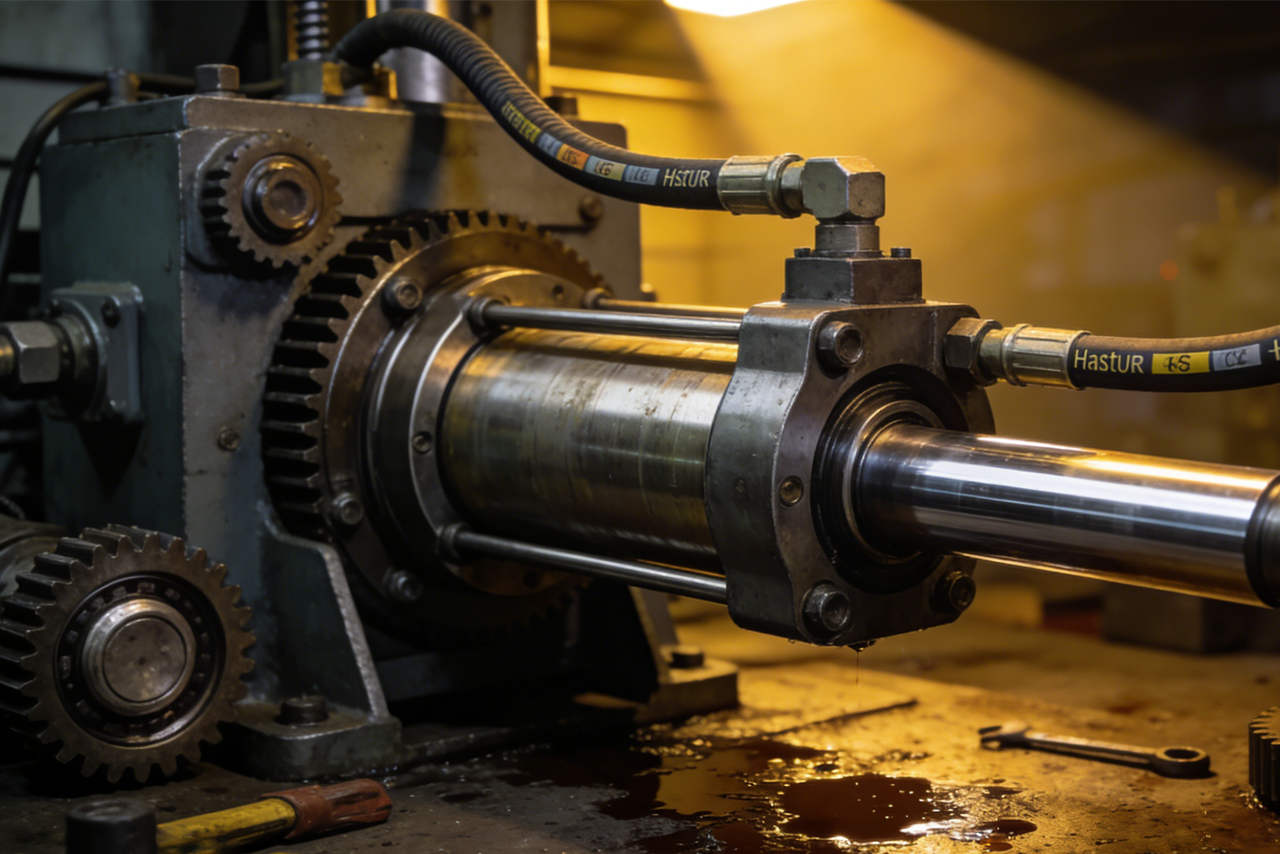
A hydraulic cylinder is a mechanical actuator that converts hydraulic energy (pressurized fluid) into straight-line motion and force. It is widely used in heavy-duty applications where electric or mechanical systems may fall short in power density or reliability.
How Does a Hydraulic Cylinder Work?
At its core, a hydraulic cylinder operates based on Pascal’s Law, which states that pressure applied to a confined fluid is transmitted equally in all directions.
Key Working Principle
The output force of a hydraulic cylinder is determined by the equation:
F = P × A
Where:
- F = Force (N)
- P = Hydraulic pressure (Pa)
- A = Effective piston area (m²)
Step-by-Step Operation
- Fluid Pressurization
- A hydraulic pump pushes oil into the cylinder through an inlet port.
- Piston Movement
- The pressurized fluid enters one side of the cylinder, pushing the piston.
- Linear Motion Output
- As the piston moves, it drives the piston rod outward, creating linear motion.
- Return Stroke
- Fluid is redirected to the opposite side (or returned via gravity/spring in single-acting cylinders), retracting the piston.
Main Components of a Hydraulic Cylinder
- Cylinder Barrel – Houses the internal components
- Piston – Separates pressure zones inside the cylinder
- Piston Rod – Transfers motion to external loads
- Seals – Prevent fluid leakage and maintain pressure
- End Caps – Close both ends of the cylinder
Each component plays a critical role in ensuring efficiency, sealing performance, and durability under high pressure.
Types of Hydraulic Cylinders
Understanding different types helps in selecting the right solution for specific applications:
- Single-Acting Cylinders
- Operate in one direction; return via external force
- Double-Acting Cylinders
- Provide powered motion in both extension and retraction
- Telescopic Cylinders
- Multi-stage design for long stroke in compact spaces
- Heavy-Duty Hydraulic Cylinders
- Designed for high-pressure and large-load environments (e.g., mining, steel plants)
Industry Trends: Smarter and More Efficient Cylinders
Modern hydraulic cylinders are evolving with industrial demands:
- Integration with sensors for real-time monitoring
- Energy-efficient designs reducing oil consumption
- Advanced sealing technologies extending service life
- Compatibility with servo hydraulic systems for precision control
These innovations are helping manufacturers reduce downtime, improve safety, and optimize operational costs.
Why Hydraulic Cylinders Are Critical in Industrial Applications
Hydraulic cylinders offer several unmatched advantages:
- High force output in compact designs
- Smooth and controllable motion
- Strong resistance to harsh environments
- Long service life with proper maintenance
This makes them indispensable in industries such as construction, manufacturing, agriculture, and energy.
Conclusion: A Small Component with Massive Impact
While often overlooked, hydraulic cylinders are fundamental to modern engineering systems. Their ability to deliver powerful, precise, and reliable motion continues to support industrial growth worldwide.
As businesses look to improve efficiency and performance, selecting the right hydraulic cylinder—and understanding how it works—becomes a key competitive advantage.


