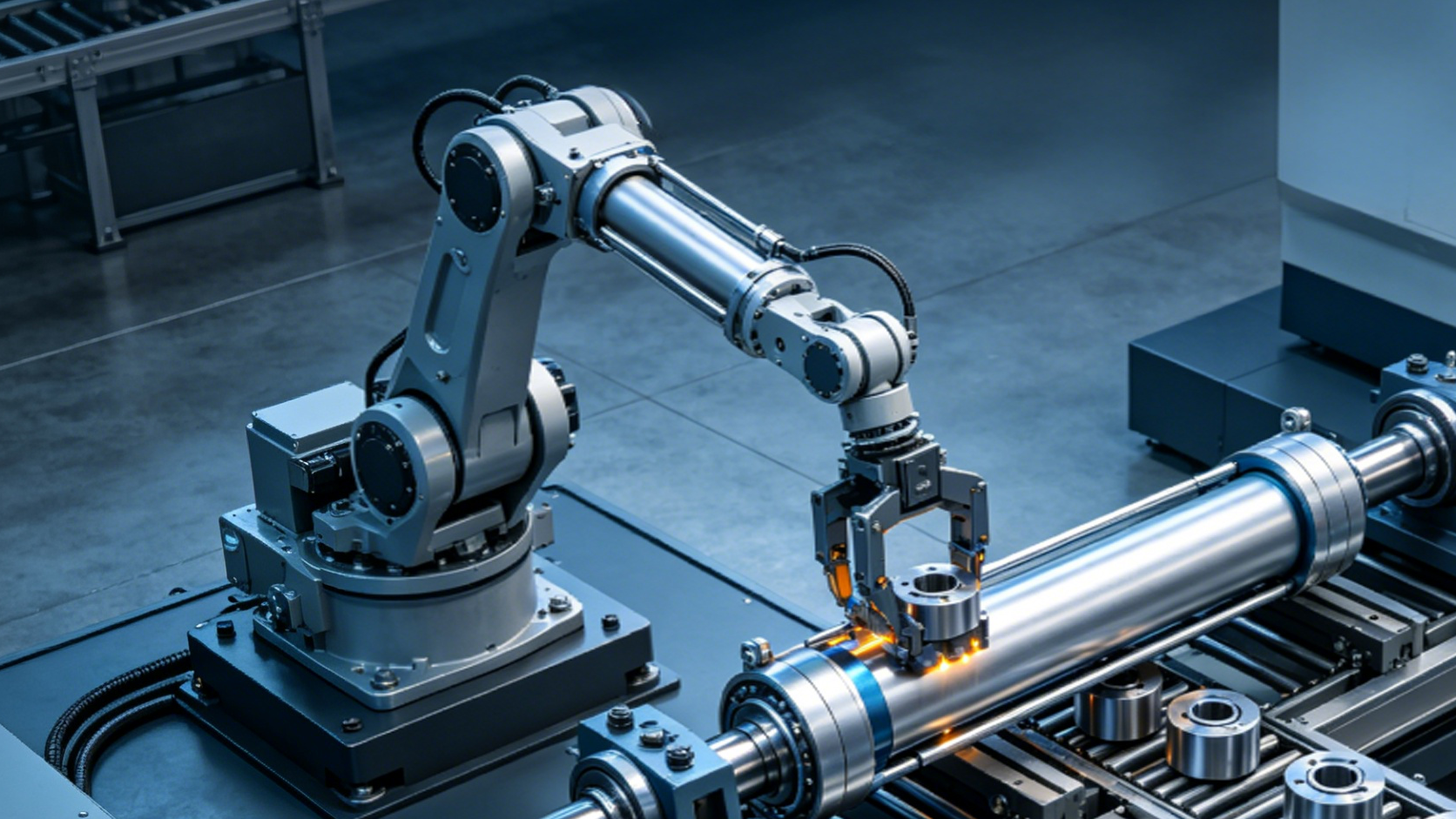
Hydraulic cylinders are one of the most important power components in industrial machinery. They are widely used in steel plants, mining equipment, construction machinery, marine engineering, and automation systems. Among all hydraulic cylinder components, the hydraulic cylinder piston rod plays a critical role.
The piston rod directly transfers hydraulic force into mechanical movement. Because it works under high pressure, continuous motion, and heavy loads, proper piston rod design is essential for safety, stability, and long-term performance.
A poorly designed piston rod can lead to bending, seal failure, oil leakage, unstable movement, and even complete hydraulic system damage.
As a professional hydraulic cylinder manufacturer, Shellppon provides custom hydraulic cylinder solutions for global industrial applications. Based on years of engineering experience, Shellppon understands that piston rod design is one of the most important factors affecting hydraulic cylinder quality.
In this article, we will explain how hydraulic cylinder piston rods are designed, what factors must be considered, and how proper design improves hydraulic system reliability.
Understanding the Role of Hydraulic Cylinder Piston Rods
The piston rod is the main moving part of a hydraulic cylinder. It connects the piston inside the cylinder to the external working mechanism.
Its main functions include:
- Transferring hydraulic force
- Supporting linear movement
- Maintaining cylinder stability
- Working together with seals to prevent leakage
- Handling heavy loads and impact force
Because the piston rod is partially exposed to the outside environment, it must resist:
- High pressure
- Friction
- Corrosion
- Dust contamination
- Heavy side loads
This is why piston rod design requires both precision engineering and careful material selection.
Common Types of Hydraulic Cylinders
Before designing the piston rod, engineers must first understand the hydraulic cylinder structure.
Single Piston Rod Hydraulic Cylinder
This is one of the most commonly used hydraulic cylinder designs.
Only one side of the piston has a piston rod. Because the piston areas on both sides are different, extension and retraction speeds may also differ.
This type is widely used in:
- Construction equipment
- Industrial machinery
- Agricultural machines
Double Piston Rod Hydraulic Cylinder
In this design, both sides of the piston include piston rods.
Because both sides have equal effective areas, movement speed and force remain more balanced.
This type is commonly used in:
- Precision machinery
- Special industrial systems
- Position control equipment
Single-Acting Hydraulic Cylinder
A single-acting hydraulic cylinder uses hydraulic pressure in only one direction.
The return movement usually depends on gravity or external force.
This structure is relatively simple and often used in lifting applications.
Hydraulic Cylinder Piston Rod Design Requirements
The hydraulic cylinder piston rod must meet several important engineering requirements.
Strength and Stability
The piston rod must handle working pressure and external loads safely.
If the rod is too weak, bending or breakage may occur during operation.
This is especially important in:
- Steel rolling mills
- Mining systems
- Heavy lifting equipment
Designers must calculate both tensile strength and buckling resistance carefully.
Standard Size Selection
When designing hydraulic cylinders, standard dimensions should be used whenever possible.
Many hydraulic cylinders are customized based on customer requirements. However, using non-standard dimensions may create problems such as:
- Seal compatibility issues
- Difficult maintenance
- Higher production cost
- Limited replacement part availability
Shellppon engineers recommend choosing standard sizes whenever practical while still meeting application requirements.
Proper Safety Factor Design
Safety factor design is critical in hydraulic cylinder engineering.
Hydraulic cylinders operate under pressure and dynamic loads. At the same time, factors such as:
- Material fatigue
- Machining tolerance
- Pressure fluctuation
- Impact loading
can all affect cylinder performance.
If the safety factor is too small, the hydraulic cylinder may fail during operation.
Professional hydraulic cylinder manufacturers carefully calculate safety margins to ensure stable long-term performance.
Guide Sleeve Length Design
Another important factor is guide sleeve length.
The guide sleeve helps support the piston rod and maintain movement stability.
If the guide sleeve length is too short, problems may occur such as:
- Rod bending
- Seal wear
- Unstable movement
- Increased friction
Generally, the guide sleeve length should be greater than 0.6 times the piston rod diameter.
This helps ensure sufficient stability during operation.
The exact length depends on:
- Cylinder size
- Rod diameter
- Application type
- Load conditions
Material Selection for Hydraulic Cylinder Piston Rods
Material selection directly affects piston rod performance and lifespan.
High-Strength Steel
Most heavy-duty piston rods use high-strength alloy steel to handle high pressure and impact loads.
Hard Chrome Plating
Hard chrome plating improves:
- Wear resistance
- Corrosion resistance
- Surface hardness
- Seal protection
This is especially important in harsh industrial environments.
Corrosion Protection
Marine and mining applications often require additional surface protection because of moisture and contamination exposure.
Proper surface treatment extends service life significantly.
Common Problems Caused by Poor Piston Rod Design
Improper piston rod design can lead to serious hydraulic system problems.
Rod Bending
Weak rod strength or poor guide support may cause bending under heavy load.
Seal Failure
Incorrect rod dimensions or rough surfaces damage hydraulic seals quickly.
Excessive Vibration
Poor stability creates vibration and uneven cylinder movement.
Oil Leakage
Seal wear caused by unstable rods often leads to hydraulic oil leakage.
Share to:


