
In industrial hydraulic systems, material selection directly determines load capacity, service life, sealing performance, and safety stability. For B2B buyers sourcing custom hydraulic cylinders, understanding the material standards of each core component is essential for evaluating supplier capability and ensuring long-term reliability.
A hydraulic cylinder mainly consists of cylinder barrel, piston rod, piston, and cylinder head (end cap). Below is a professional breakdown of commonly used steel grades and engineering requirements for each part.
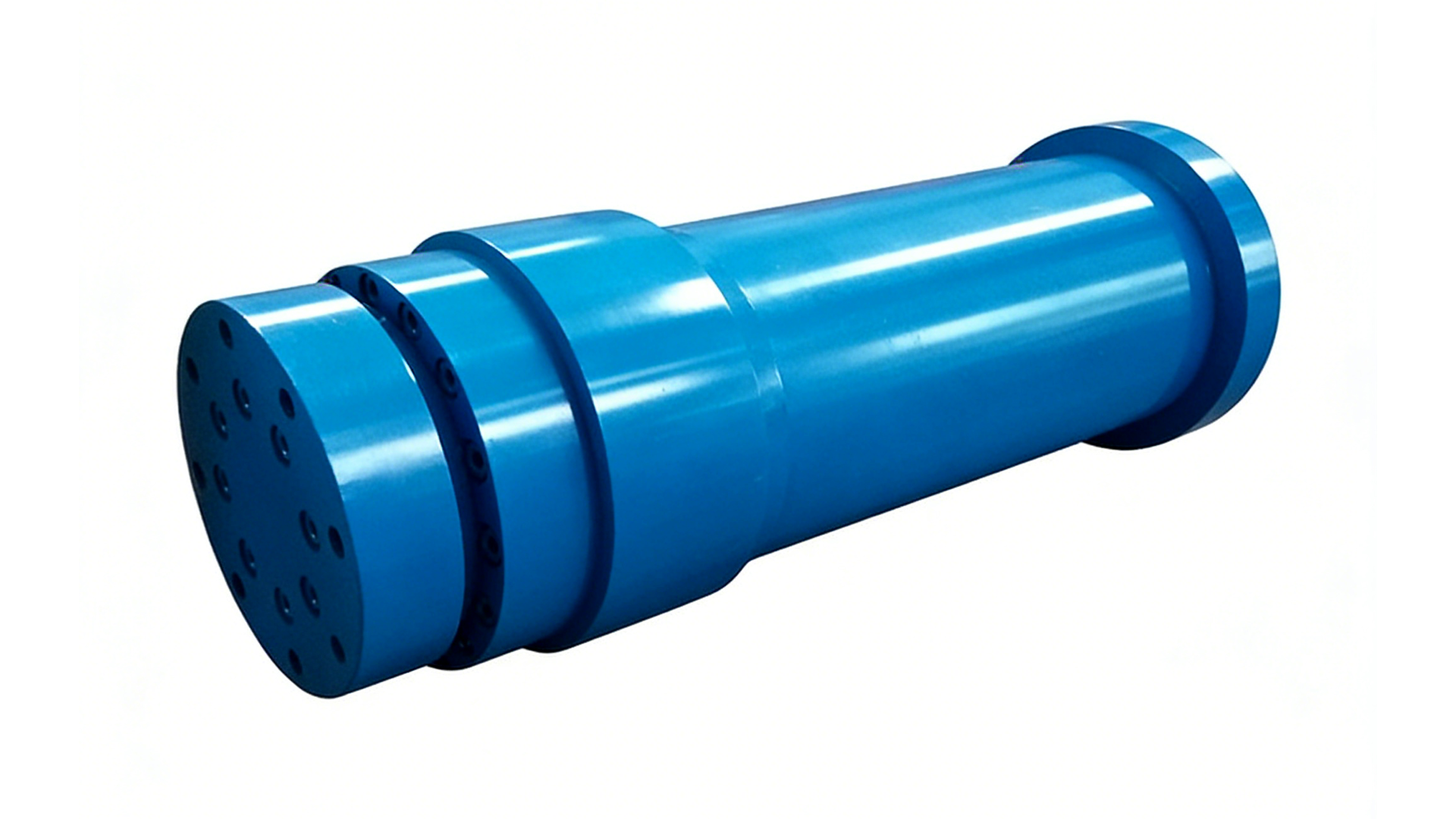
Cylinder Head (End Cap) Material Selection
The cylinder head plays a structural and sealing role. It withstands internal pressure and, in some designs, also serves as a guide for the piston rod.
Material Selection by Pressure Level
-
Low-pressure cylinders: Cast steel or general castings
-
Medium–low pressure: HT300 gray cast iron
-
Medium–high pressure: 35# steel or 45# steel
For reference:
-
HT300 is equivalent to high-strength gray cast iron.
-
35# and 45# steel are widely used carbon structural steels in hydraulic applications.
Special Structural Considerations
When the cylinder head also functions as a piston rod guide sleeve:
-
Cast iron is recommended due to its wear resistance.
-
The guide surface should be overlaid with brass, bronze, or other anti-wear materials.
-
If a replaceable guide bushing is press-fitted into the cylinder head, the bushing material should be:
-
Wear-resistant cast iron
-
Bronze
-
Brass
-
This design improves service life and reduces maintenance costs in high-cycle industrial environments.
Piston Material Standards
The piston converts hydraulic energy into mechanical force and must ensure wear resistance and dimensional stability.
Common Materials:
-
Wear-resistant cast iron
-
Gray cast iron (HT300, HT350)
-
Carbon steel
-
Aluminum alloy
Machining Accuracy Requirement:
The coaxiality tolerance between piston and piston rod should be controlled within 0.03 mm, ensuring smooth operation and minimizing seal wear.
For high-load industrial hydraulic cylinders, cast iron or steel pistons are preferred for durability and thermal stability.
Cylinder Barrel (Tube) Material
The cylinder barrel directly withstands hydraulic pressure and is a critical structural component.
Common Materials:
-
20# seamless steel pipe (low-pressure systems)
-
35# seamless steel pipe
-
45# seamless steel pipe (high-pressure systems)
Surface Finishing Requirements:
The inner surface must undergo:
-
Honing
-
Roller burnishing
To achieve a surface roughness of Ra ≤ 0.4 μm, ensuring:
-
Smooth sealing performance
-
Reduced friction
-
Extended seal life
-
Improved efficiency
For high-pressure hydraulic cylinders, 45# seamless steel pipe is typically selected due to its superior strength and fatigue resistance.
Piston Rod Material & Heat Treatment
The piston rod transmits force externally and is subject to bending, tensile stress, and surface wear.
Types of Piston Rods:
-
Solid piston rod
-
Hollow piston rod
For hollow rods, a ventilation hole must be reserved at one end for welding and heat treatment processes.
Common Materials:
-
Solid rod: 35# steel or 45# steel
-
Hollow rod: 35#/45# seamless steel pipe
Heat Treatment Requirements:
After rough machining:
-
Quenching and tempering to achieve 229–285 HB hardness
-
When necessary, high-frequency surface hardening
-
Final hardness: 45–55 HRC
-
This treatment enhances:
-
Surface wear resistance
-
Fatigue strength
-
Share to:


 Understanding the Serious Hazards of External Leakage in Hydraulic CylindersB2B Hydraulic Cylinders Drive Efficient Industrial Lifting


