Custom Hydraulic Cylinders: Required Drawings & Parameters for Quotation
News Details
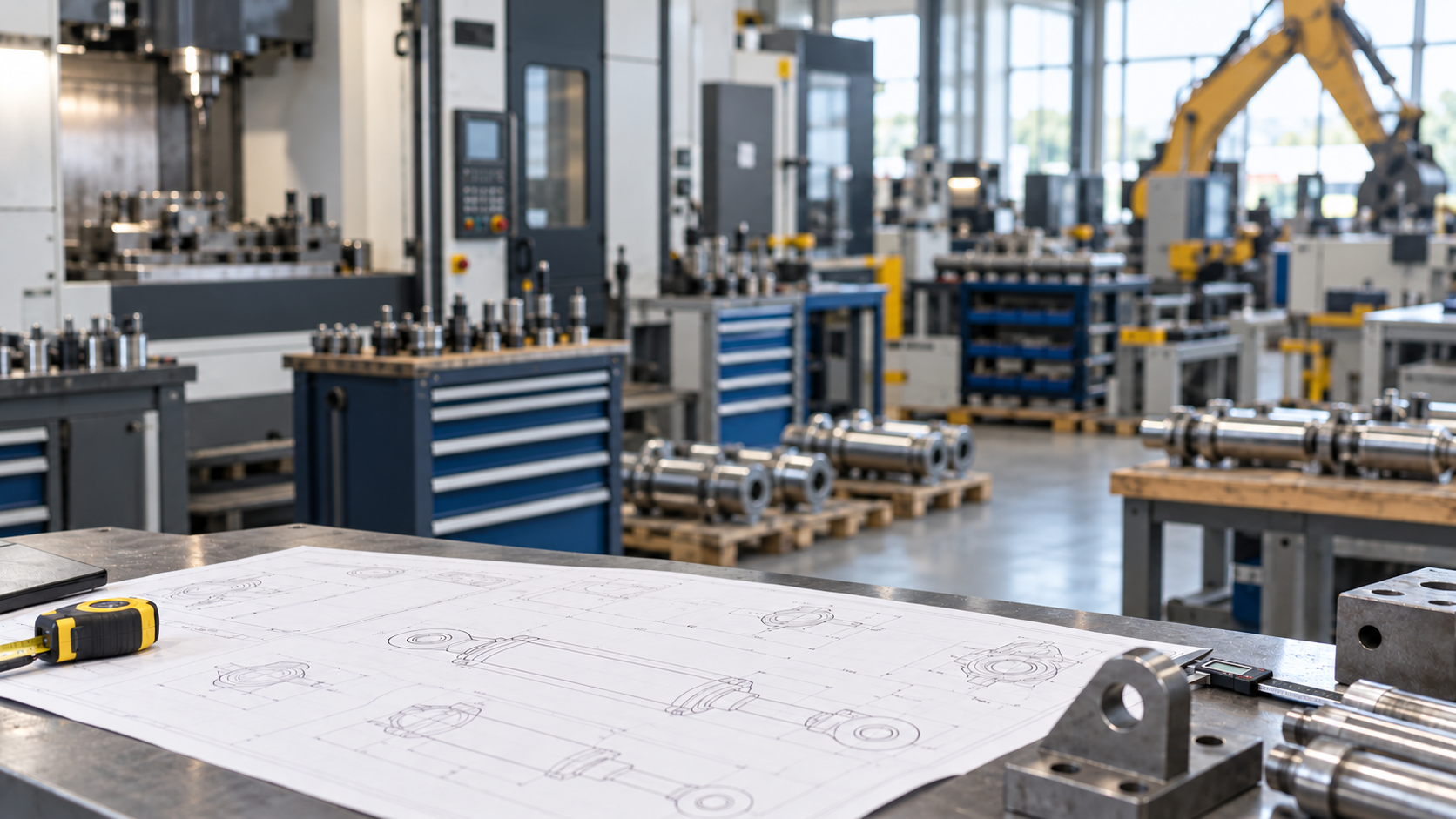
A clear inquiry helps a supplier provide a useful quote. Yet many custom hydraulic cylinder requests start with only a photo, a bore size or a target price. These details can begin a discussion, but they rarely define a cylinder well enough for production.
For equipment makers, distributors and replacement parts buyers, missing data can lead to extra questions, revised prices and fit problems. Therefore, preparing a complete request saves time before manufacturing begins.
This guide explains the drawings, operating data and order details to share with a custom cylinder supplier.
Define the Custom Hydraulic Cylinder Application
First, explain where the cylinder will work and what it must do. A cylinder that tilts a loader bucket has different needs from one that clamps a workpiece or lifts a platform.
Include:
- Machine type and model.
- Cylinder function and installation position.
- New OEM design or replacement part.
- Single-acting or double-acting operation.
- Typical working hours and movement frequency.
- Exposure to impact, vibration or uneven loads.
Also, state whether you need a complete assembly, a bare cylinder or individual parts.
This information helps the supplier understand the job before choosing materials, seals and production methods.
Provide a Dimensioned Hydraulic Cylinder Drawing
A dimensioned drawing gives both parties a shared technical reference. It should show the cylinder’s overall layout, mounting points, ports and key interfaces.
For an OEM hydraulic cylinder, send the latest approved drawing revision. Include a revision number and date so old files do not enter production.
| Drawing detail | What to show |
| Bore diameter | Internal cylinder diameter |
| Rod diameter | Piston rod size |
| Stroke | Required working travel |
| Closed length | Length between stated reference points when retracted |
| Extended length | Length between the same points when extended |
| Mounting dimensions | Pin holes, bearing widths, flange patterns or trunnion sizes |
| Oil ports | Thread type, size, position and orientation |
| Special features | Cushions, sensors, valve blocks or mechanical stops |
| Critical tolerances | Fit requirements at mounting and assembly interfaces |
Clearly define measurement points. For example, “overall length” may mean the full physical length or the distance between mounting centers. That difference can cause a replacement cylinder to fit poorly.
A PDF drawing is useful for review. In addition, ask the supplier which CAD formats it can accept for detailed design work.
Share Load, Pressure and Speed Data
Dimensions alone do not confirm whether a custom hydraulic cylinder will perform as required. The supplier also needs operating data.
Provide the normal working pressure and expected peak pressure. If either value is unknown, mark it as unknown rather than guessing.
Next, state the required pushing and pulling loads. These may differ, and the machine’s linkage can change the cylinder force throughout its travel.
Include:
- Maximum load in each direction.
- Load position and direction.
- Available hydraulic flow.
- Target extension and retraction speeds.
- Cycles per minute or hour.
- Time spent holding a load.
- Expected shock or pressure spikes.
For long-stroke cylinders, also provide mounting and support details so the design review can address rod stability.
If the cylinder drives a linkage, share a layout showing its movement. A load figure without the linkage geometry may not describe the most demanding working position.
Specify Mounting and Hydraulic Connections
Mounting details are a common source of quotation errors. Two cylinders can have the same bore and stroke while using completely different installation interfaces.
Confirm whether the design uses eye, clevis, flange, foot or trunnion mounting. Then provide pin diameters, bearing sizes, mounting widths and any limits on movement.
Shellppon lists SB-Y1 cylinders with several mounting configurations, including foot, trunnion, center pin and flange options, with customizable bore and stroke. These provide a starting point for discussing installation needs.
Oil connections need the same care. State the exact thread specification, port location and fitting clearance. A similar-looking thread should not be treated as an approved substitute.
Finally, identify any load-holding valves, manifolds or sensors that must connect to the cylinder. Include the hydraulic circuit when these interfaces affect the design.
Describe Fluid, Temperature and Site Conditions
A custom cylinder supplier needs to know the operating environment before selecting seals and surface protection.
Specify the hydraulic fluid type and grade. Also, provide the expected fluid temperature range and ambient conditions.
For outdoor machinery, describe exposure to:
- Dust, sand and mud.
- Rain, moisture or salt spray.
- Washdown water and cleaning agents.
- Cold starts or nearby heat sources.
- Long periods of outdoor storage.
These conditions influence seal materials, wipers, rod coatings and external finishes.
If corrosion resistance matters, define the test method and acceptance criteria with the supplier. Likewise, state temperature requirements as a range rather than using broad terms such as “high temperature.”
Separate Required Specifications from Design Preferences
Buyers sometimes send a drawing that mixes fixed requirements with optional choices. As a result, the supplier may price features that are not essential.
Mark each important detail as either:
- Required: Must match the drawing or machine interface.
- Preferred: Can change with buyer approval.
- Supplier proposal: Open for engineering review.
For example, mounting dimensions may be fixed, while a seal brand or paint color may allow alternatives.
For a repeat OEM hydraulic cylinder order, define which changes require written approval. Material grades, seal systems and critical dimensions should remain under clear revision control.
Include Quantity, Testing and Delivery Requirements
Order details affect both price and lead time. Therefore, send the sample quantity, first batch quantity and expected repeat demand.
Also, state whether you need a prototype for fit checks, bench testing or machine trials before batch production.
Agree on inspection requirements early. Depending on the application, these may include dimensional checks, functional testing, leakage testing and pressure testing under defined conditions.
Ask the supplier to identify:
- Tests included in the quotation.
- Test conditions and acceptance limits.
- Reports supplied with the shipment.
- Traceability or identification requirements.
- Packaging and corrosion protection.
- Warranty terms and spare parts support.
For overseas orders, include the delivery destination and requested trade term. This makes quotations easier to compare on a consistent basis.
Requesting a Quote Without a Complete Drawing
You can still begin an inquiry without a full drawing. However, explain what information is available and what needs to be confirmed.
For a replacement cylinder, provide clear photos, identification marks, measured mounting dimensions, stroke and machine details. An old part number may also help.
If key internal dimensions are unknown, discuss whether a physical sample or an engineering measurement review is needed.
A photograph can support an initial assessment. Production, however, should follow confirmed technical requirements and an approved drawing.
Work with Shellppon on Your Custom Hydraulic Cylinder Inquiry
Shellppon Hydraulic presents custom cylinder manufacturing and OEM/ODM support, along with separately available components such as piston rods and rod-end parts. This allows buyers to discuss complete assemblies and related replacement components with the same team.
When comparing a hydraulic cylinder manufacturer in China, send each supplier the same drawing revision, operating data and order scope. Then review technical exceptions alongside price and delivery time.
For your next inquiry, prepare one package containing the drawing, application notes, pressure and load data, environmental conditions, quantities and inspection requirements.
Contact Shellppon Hydraulic to share your specifications and request a custom hydraulic cylinder quotation for your OEM equipment or replacement project.


