How Does a Rotary Cylinder Work? Mechanics, Types, and Applications
News Details
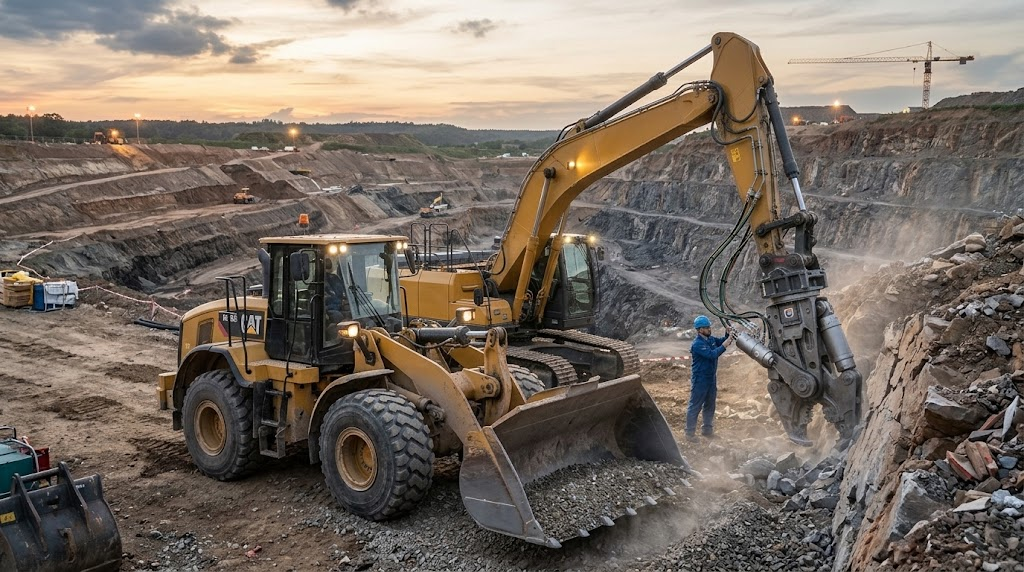
Heavy machines and automated factory lines require significant rotational force to move heavy loads smoothly. Standard linear cylinders push and pull in straight lines. However, many industrial applications require machinery to tilt, swing, or rotate instead. This is where a rotary cylinder hydraulic actuator comes into play.
Understanding how these useful devices work helps plant managers and engineers select the right equipment for their projects. In this simple guide, we will examine how rotary cylinders operate, explore their main types, and see where they are used in today's factories.
What is a Rotary Cylinder?
A rotary cylinder is a compact, fluid-powered tool that generates rotational movement over a defined angle. Unlike electric motors that spin continuously, a rotary cylinder moves back and forth within a fixed range. For example, it might rotate 90 degrees, 180 degrees, or 270 degrees.
By using high-pressure hydraulic fluid, these units generate substantial rotational power within a small footprint. Because they require minimal space, engineers often prefer them over large mechanical gearboxes.
How Does a Rotary Cylinder Work?
The primary function of a rotary cylinder is straightforward: it converts hydraulic fluid pressure into powerful rotational movement. While internal mechanical designs vary, the fundamental operating process follows a few simple steps.
First, hydraulic oil flows into the cylinder port under controlled pressure. Next, this fluid pressure drives an internal component—such as a piston, a gear rack, or a flat vane—forward. Subsequently, internal gears or helical grooves redirect this linear push into smooth rotational force around a central shaft.
Finally, as the shaft rotates, it positions the attached machine arm or heavy valve. When fluid enters the opposite port, the direction reverses, smoothly returning the mechanism to its starting position.
Main Types of Rotary Cylinders
Engineers select different rotary cylinder designs based on their torque requirements, rotation angles, and available installation space.
1. Rack and Pinion Cylinders
This common design features a linear piston connected to a gear rack. When fluid pressure moves the piston, the rack drives a circular gear to create rotation. Due to its robust construction, this type easily handles heavy loads and demanding conditions.
2. Helical Gear Actuators
Helical cylinders utilize internal spiral teeth. As the internal piston advances, these helical grooves force the shaft to rotate smoothly. Consequently, helical designs deliver maximum rotational force in very confined spaces.
3. Vane Type Actuators
Vane cylinders consist of a flat paddle within a sealed chamber. Pressurized oil acts directly on the paddle to turn the output shaft. With very few moving parts, vane actuators offer a simple and compact design.
Key Differences: Rotary Cylinder Hydraulic vs. Rotary Cylinder Engine
It helps to clarify a common misunderstanding between two similar terms used in mechanical engineering:
-
Rotary Cylinder Hydraulic Actuator: Uses fluid power from an external pump to safely rotate heavy components. It prioritizes strength, safety, precise positioning, and holding heavy loads stationary.
-
Rotary Cylinder Engine: Refers to a combustion engine (such as an aircraft radial engine or rotary motor) that burns fuel inside rotating cylinders to generate power.
While both mechanisms produce rotation, industrial manufacturing relies on hydraulic cylinders to handle heavy material movement without burning fuel within the unit.
Common Applications in Modern Industry
Because these actuators pack substantial power into a small space, many major industries utilize them daily:
-
Factory Automation: They swing robotic arms, flip heavy assembly fixtures, and transfer parts between workstations.
-
Construction Machinery: They control crane rotation bases, position drilling booms, and swing excavator platforms under heavy loads.
-
Marine Operations: They turn ship steering rudders, open heavy cargo hatches, and operate large marine valves.
-
Power Plants: They control large water gates, regulate steam valves, and tilt solar panel arrays toward the sun.
Why Partner with Experienced Hydraulic Specialists?
Selecting a high-quality product prevents oil leaks, mechanical play, and costly machine downtime. As an established hydraulic cylinder manufacturer China, Shellppon Hydraulic manufactures rugged fluid power equipment built to withstand demanding site conditions.
When you collaborate with a skilled OEM hydraulic cylinder factory, you gain access to customized shaft sizes, specialized seal kits, and precise power ratings tailored to your project requirements. Furthermore, sourcing through hydraulic cylinder wholesale China trade networks provides your business with direct factory cost savings while maintaining high product quality.
Whether you need custom-engineered actuators or bulk orders from reliable hydraulic cylinder suppliers in China, partnering with proven experts ensures long-lasting equipment performance.
Summary
In summary, a rotary cylinder converts hydraulic fluid pressure into precise rotational motion using sophisticated internal gearing. Its robust holding power, compact size, and durable design make it an indispensable tool for modern industrial machinery.
If you want to upgrade your equipment with custom rotary cylinders or need clear technical advice, please feel free to Contact Us today. Our team of specialists is ready to assist you in finding the right hydraulic solution for your business.


