Hydraulic Press Cylinder Sizing: Force, Speed, Frame Alignment and Mounting
News Details
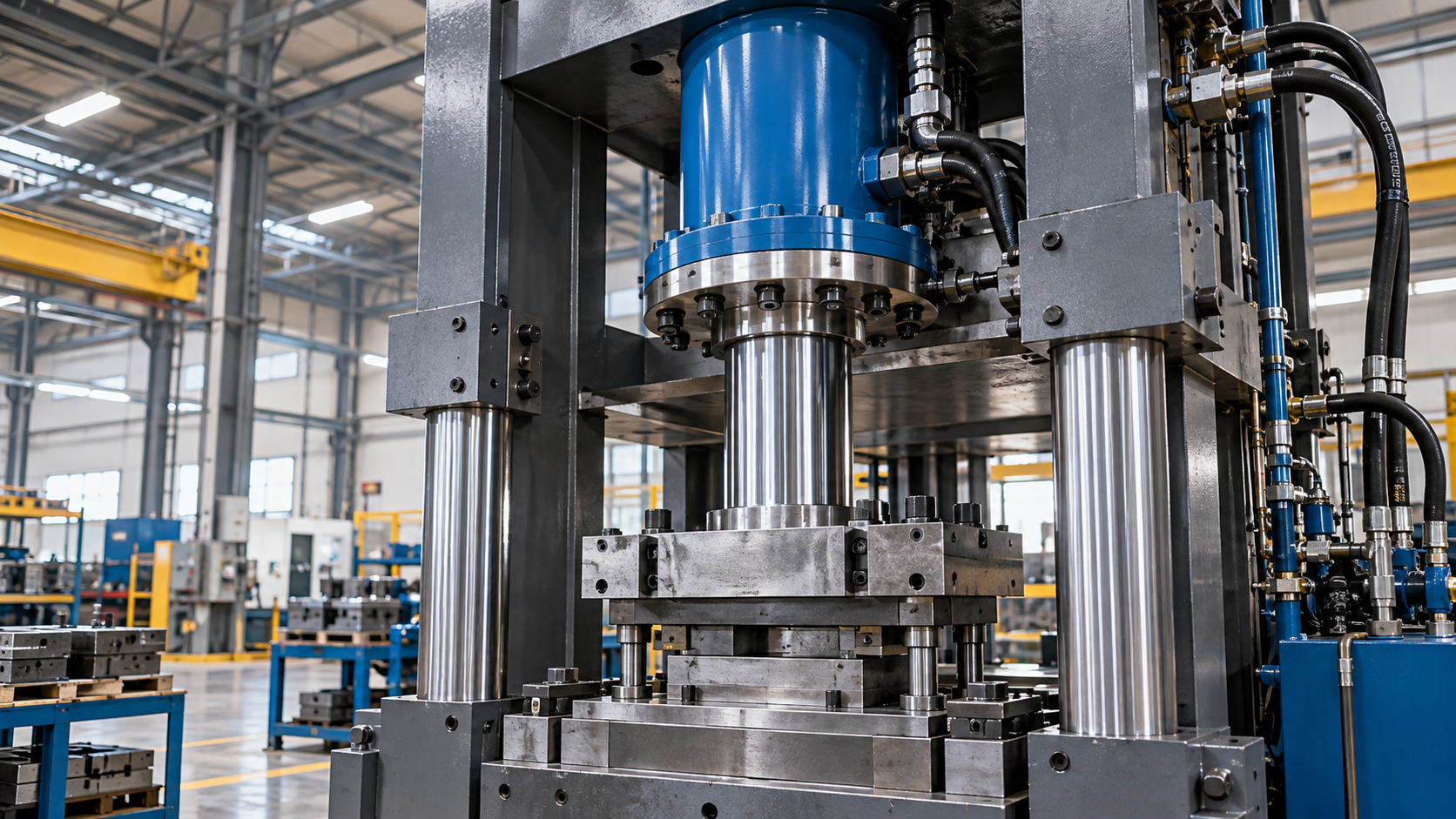
A hydraulic press cylinder must deliver stable force, smooth speed and long service life. However, correct sizing is not only about bore size. It also depends on pressure, oil flow, stroke, rod strength, frame alignment and mounting style.
If the cylinder is too small, the press may not reach its rated tonnage. If it is too large, the system may move slowly, use more oil and add extra cost. Therefore, the best choice is a balanced design that fits the real press duty.
Start with Press Force
The first step is to define the required force. This force may be used for forming, stamping, bending, punching, compacting or straightening.
The basic formula is:
Force = Pressure x Piston Area
A larger bore gives more piston area. So, at the same pressure, a large bore hydraulic cylinder can create more force. Still, a larger bore also needs more oil to move. As a result, pump size, valve flow and cycle time must be checked together.
For better sizing, confirm these points before design:
- Maximum working force
- Normal operating force
- System pressure
- Required safety margin
- Stroke position where full force is needed
- Load type, such as steady load or impact load
In many presses, full force is only needed near the end of the stroke. In that case, the system may use fast approach speed first, then slow pressing speed under high pressure.
Match Speed with Oil Flow
Cylinder speed depends on oil flow and piston area. In simple terms, more flow increases speed, while a larger bore reduces speed at the same flow.
The basic speed rule is:
Speed = Flow / Area
This is why force and speed must be sized together. A large bore hydraulic cylinder can give high force, but it may need a larger pump if fast movement is required.
A press often has three movement stages:
- Fast approach
- Slow pressing
- Fast return
Because each stage has a different load, the hydraulic system may use different pump stages, valve settings or flow paths. Also, the retract speed is often faster than the extend speed because the rod takes up part of the oil area.
To avoid heat and pressure loss, check port size, hose size and valve capacity. If these parts are too small, the cylinder may move unevenly and the oil temperature may rise.
Select the Right Bore and Rod
Bore size sets the press force. Rod size affects strength, return force and buckling risk. Both must be reviewed before the final cylinder drawing.
For high-force press work, the rod is often under compression. If the stroke is long or the load is not centered, the rod may bend. Once bending starts, seals and guide rings wear faster. Then leakage, rod scoring and poor press accuracy may follow.
Rod sizing should consider:
- Press force
- Stroke length
- Mounting type
- Rod extension length
- Guide support
- Side-load risk
In heavy press systems, a stronger rod and wider guide support can improve stability. Although this may raise the first cost, it often reduces repair cost later.
Check Stroke Length Carefully
The stroke must be long enough for the process, but extra stroke should be avoided. A longer stroke needs more oil, takes more time and increases rod buckling risk.
For example, a deep drawing press may need a long stroke. However, a trimming or punching press may only need a short stroke. Therefore, the cylinder stroke should match the tooling and part handling process.
It is also useful to leave a small stroke margin. This helps avoid hard bottoming at the end of travel. In addition, position sensors or stroke control can help protect the cylinder and tooling.
Keep the Press Frame Aligned
Frame alignment has a major effect on hydraulic press cylinder life. The cylinder should push in a straight line through the platen, tooling and frame.
If the frame is not square, side load can enter the cylinder. This can damage the rod, seals, bearings and piston. It can also cause uneven forming quality.
Common signs of alignment problems include:
- Scratches on one side of the rod
- Uneven seal wear
- Abnormal noise during pressing
- Sudden pressure spikes
- Platen tilt
- Short seal life
Before installation, check the cylinder centerline, platen guide, tooling position and frame stiffness. Also, inspect the frame under load, not only when the press is empty. A frame may look aligned at rest but flex during pressing.
Choose the Correct Mounting Style
Mounting style controls how force moves from the cylinder into the press frame. For many press applications, a flange mount hydraulic cylinder is a strong choice because it supports direct axial loading.
A front flange mount is often used when the cylinder must be fixed near the working side. A rear flange mount may be better when the cylinder is supported from the back of the frame. The right choice depends on space, force direction and service access.
The mounting surface must be flat, clean and strong. Bolts should be sized for the load and tightened evenly. If the mount is weak or uneven, the cylinder may tilt under pressure.
For high tonnage presses, avoid mounting styles that allow unwanted movement. The cylinder should stay square to the frame through the full stroke.
Do Not Ignore Seals and Guides
A hydraulic press cylinder often works under high pressure. It may also face shock loads, heat and long holding time. Therefore, seal and guide design is important.
Seals should match the pressure, oil type, temperature and speed. For high pressure, anti-extrusion support may be needed. For long holding cycles, low leakage seals are important.
Guide rings and bearings help keep the rod and piston centered. Wider guide support can reduce wear when small side loads occur. This is especially useful for heavy-duty press work.
Plan for Service and Downtime
Good cylinder design should also make service easier. Leave enough space for hose removal, lifting points, sensor access and seal replacement. Protect the rod from dust, weld spatter and impact.
During operation, inspect leakage, rod surface, mounting bolts, oil temperature and pressure stability. Small changes often warn of larger issues. For example, a small rod scratch can become a seal failure if it is ignored.
Work with a Custom Cylinder Supplier
Press systems often need more than a standard cylinder. Bore, stroke, rod size, seals, ports and mounting may need to be custom designed for the press frame and duty cycle.
Shellppon Hydraulic provides hydraulic cylinder solutions for industrial equipment, including large bore, heavy-duty and custom press cylinder designs. If you need help selecting a hydraulic press cylinder or a flange mount hydraulic cylinder, you can contact Shellppon Hydraulic to discuss your project.
Final Thoughts
Correct hydraulic press cylinder sizing starts with force, but it also includes speed, stroke, rod strength, alignment and mounting. When these points are checked together, the press can run more smoothly and safely.
A well-sized cylinder protects the press frame, improves part quality and reduces downtime. More importantly, it helps the whole hydraulic system work with less stress and better control.


