Steel Mill Hydraulic Cylinders: How to Reduce Heat, Scale and Side-Load Failures
News Details
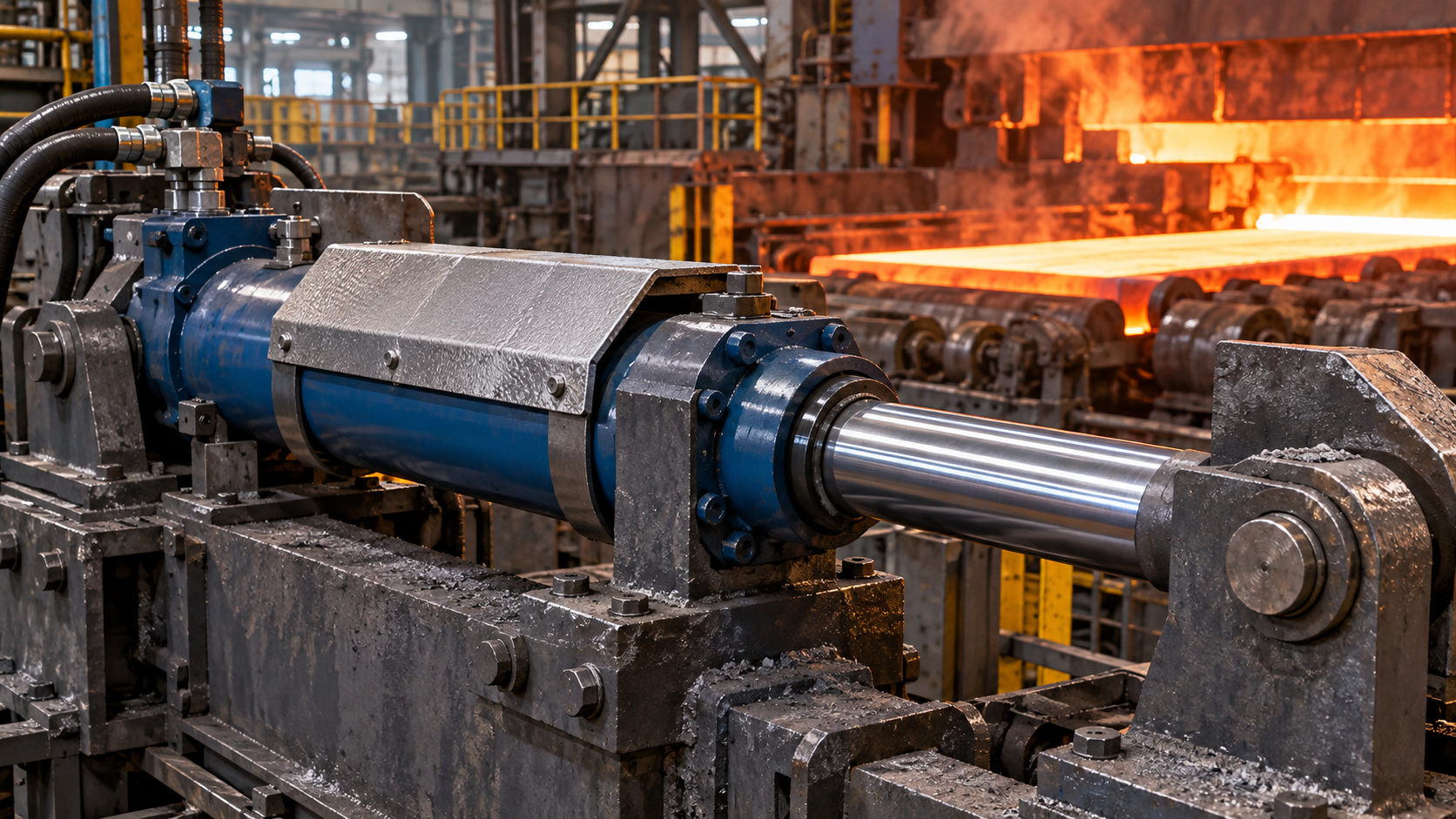
Steel mills are hard on hydraulic cylinders. High heat, flying scale, shock loads, water spray and dust can shorten service life fast. When one steel mill hydraulic cylinder fails, production may stop, maintenance costs rise and delivery schedules can slip.
The good news is that many failures can be reduced with better design, cleaner installation and simple inspection habits. For buyers, engineers and maintenance teams, the key is to match the cylinder to the real working conditions, not only the rated load.
Why Steel Mill Hydraulic Cylinders Fail
A metallurgical hydraulic cylinder often works near furnaces, rolling lines, continuous casters, shears, presses or material handling systems. These areas create three common risks.
First, heat can damage seals, oil and surface finishes. As temperature rises, seals may harden, crack or lose shape. At the same time, hydraulic oil can thin out, which lowers film strength and increases wear.
Second, scale and dust can enter the sealing area. Mill scale is abrasive. Once it sticks to the rod, it can cut wipers, scratch chrome and damage the rod seal.
Third, side load can bend rods, wear bearings and break seals. This often happens when the cylinder is poorly aligned, the structure moves under load or the mounting style does not match the motion path.
Because these risks often happen together, a heavy duty cylinder for steel mills must be built as a complete system.
Control Heat Before It Reaches the Cylinder
Heat is one of the main causes of early seal failure. Therefore, cylinder location and protection should be reviewed before the design is final.
Where possible, place the cylinder away from direct radiant heat. If this is not possible, use heat shields, insulation plates or protective covers. In some cases, a longer rod, remote mounting point or special bracket can move seals farther from the hottest zone.
Seal choice also matters. Standard seals may work well in normal plants, but steel mills often need high-temperature seal materials. The right choice depends on oil type, pressure, speed and peak temperature. For that reason, it is better to share the real working temperature with the cylinder manufacturer instead of using only an average value.
Oil temperature should also be controlled. If the system runs too hot, check the cooling unit, pump size, relief valve setting and flow path. Even the best steel mill hydraulic cylinder will struggle if the whole hydraulic system is overheated.
Keep Scale Away from Rods and Seals
Scale looks small, but it acts like cutting grit. Once it reaches the rod seal, leakage and scoring can follow. So, the first line of defense is a strong wiper system.
For high-scale areas, use heavy-duty wipers, double wipers or scraper rings. These parts help clean the rod before it retracts into the cylinder. In very dirty areas, protective bellows, steel guards or rod boots can add another layer of defense.
Rod surface treatment is also important. Hard chrome plating is widely used, while other surface options may be selected for stronger wear or corrosion resistance. However, coating alone is not enough. The rod must also be protected from impact, weld spatter and poor storage before installation.
In addition, avoid placing the cylinder where scale can fall directly on the rod. A small change in mounting angle or shield position can reduce contamination and extend seal life.
Reduce Side Load with Better Mounting
Side load is often hidden at first. The cylinder may still move, but the rod, piston and bearing surfaces are under uneven stress. Over time, this causes seal wear, rod scoring, rod bending or cracked mountings.
To reduce side load, start with alignment. The cylinder centerline should match the direction of force through the full stroke. If the machine linkage moves in an arc, the mount should allow that motion. Common choices include clevis mounts, trunnion mounts and spherical bearings.
Also, check the structure around the cylinder. A strong metallurgical hydraulic cylinder cannot fix a weak frame. If the bracket twists under load, side force will still reach the rod. Therefore, both the cylinder and the machine structure must be reviewed together.
For long-stroke cylinders, rod buckling is another key risk. The rod diameter, stroke length, load and mounting style should be checked during design. When loads are high, a larger rod or different mounting method may be needed.
Choose the Right Seals, Bearings and Materials
A steel mill cylinder should not be selected only by bore, stroke and pressure. The internal parts matter just as much.
Seals should match the pressure, temperature, oil type and speed. Bearings should support the rod and piston under shock and uneven load. In many mill applications, wider wear rings or stronger guide systems can help reduce metal contact.
Material strength is also important. Rods, barrels, pistons and end caps must handle impact and pressure spikes. In some cases, induction-hardened rods, high-strength steel and reinforced end connections are worth the extra cost because they reduce downtime later.
When buying a heavy duty cylinder, ask for the design limits, not just the catalog size. A reliable supplier should be able to discuss load, duty cycle, mounting, temperature and contamination in detail.
Improve Installation and Start-Up Checks
Even a well-made cylinder can fail early if it is installed badly. Before start-up, check that pins fit correctly, brackets are square and hoses do not pull on ports. Then cycle the cylinder slowly with low load to confirm smooth movement.
Next, look for signs of binding. Uneven speed, abnormal noise, sudden pressure rise or rod vibration may point to alignment problems. It is better to fix these issues during commissioning than after a seal failure.
Cleanliness is also vital. Flush the hydraulic system before connecting the cylinder. Dirty oil can damage seals and valves from the first day of use.
Build a Simple Maintenance Routine
A practical inspection routine can prevent small issues from becoming shutdowns. During regular checks, look for oil leakage, rod scratches, loose pins, damaged guards and unusual heat.
Also, watch the oil. High water content, dark color, burnt smell or metal particles can point to deeper system problems. Replace filters on schedule and keep breathers clean.
For cylinders near hot zones, inspect seals and wipers more often. For cylinders under shock load, check mounts and pins closely. In this way, maintenance can be based on real risk instead of a fixed calendar only.
Work with a Custom Cylinder Manufacturer
Steel mills need cylinders that fit real site conditions. A standard unit may be fine for simple duties, but demanding mill equipment often needs a custom design.
Shellppon Hydraulic provides hydraulic cylinder solutions for industrial applications, including heavy-load and metallurgical equipment. If you need help with bore size, mounting style, seal selection, rod protection or replacement cylinder design, you can contact Shellppon Hydraulic to discuss your project.
Final Thoughts
Heat, scale and side load are three of the biggest causes of steel mill hydraulic cylinder failure. However, they can be managed with the right design choices. Use heat protection, strong wipers, proper rod coatings, correct mounting and regular inspection.
Most importantly, choose a metallurgical hydraulic cylinder based on the full working environment. When the cylinder, machine frame and hydraulic system are designed together, service life improves and unplanned downtime becomes easier to control.


