Custom Non-Standard Heavy-Duty Hydraulic Cylinder Sizing Selection Calculation
News Details
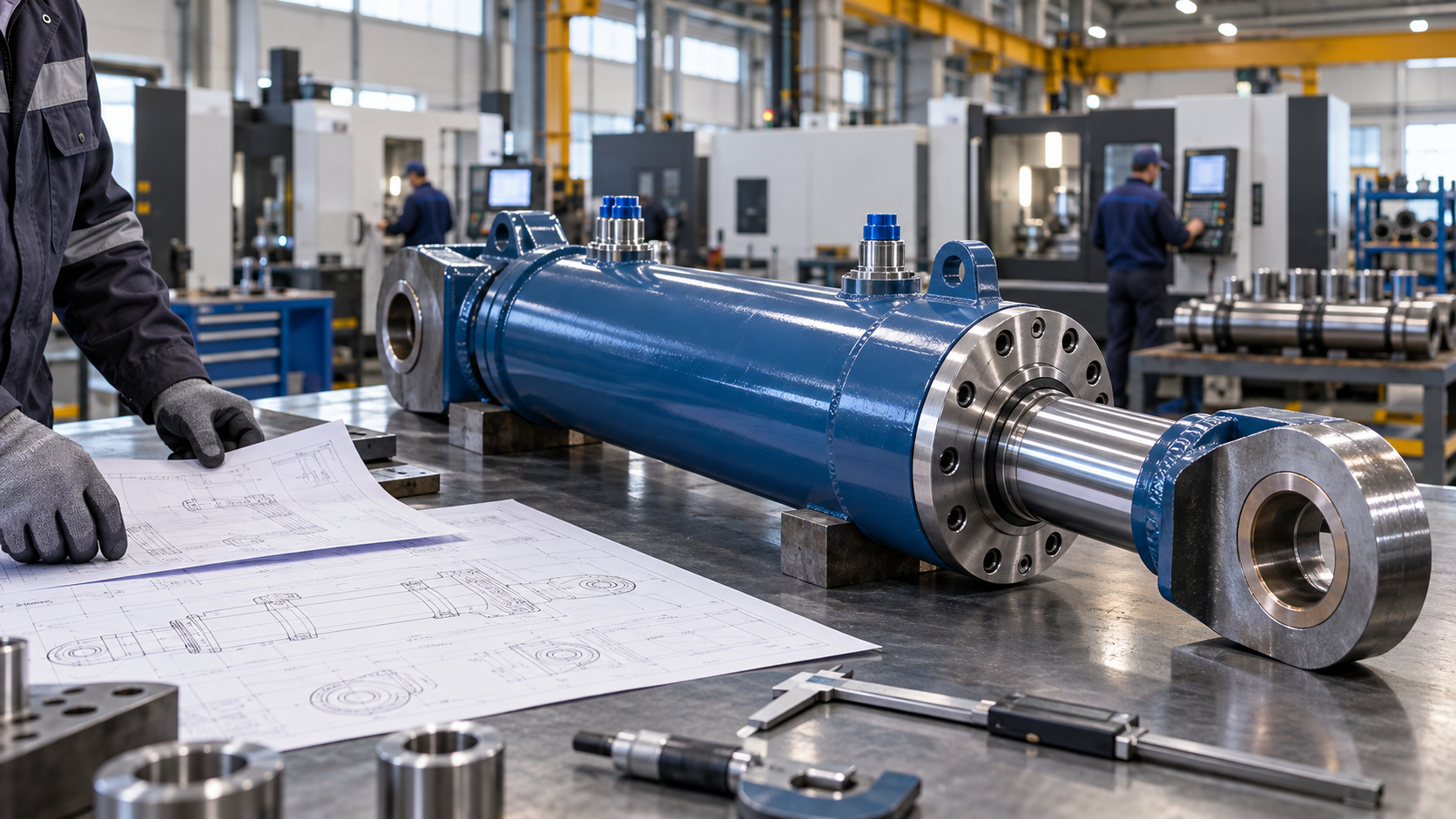
Ordering a standard hydraulic cylinder is simple. However, many machines do not work under standard conditions. Some need higher force. Some face shock loads, dust, heat, salt spray, or long duty cycles. Others must fit into a tight space or match an old machine design.
That is why many buyers choose a custom non-standard hydraulic cylinder. A well-built custom cylinder can improve safety, reduce downtime, and extend machine life. Yet, to get the right result, you need to share the right details with your supplier from the start.
This guide explains what B2B buyers, engineers, and purchasing teams should prepare before placing an order.
What Is a Custom Non-Standard Hydraulic Cylinder?
A custom non-standard hydraulic cylinder is a cylinder designed for a specific machine, working condition, or installation space. It may differ from regular models in bore size, stroke, mounting style, pressure rating, rod material, seal type, port position, or surface treatment.
For example, a heavy-duty cylinder used in mining equipment may need a thicker tube, stronger rod, special seals, and higher pressure resistance. Meanwhile, a cylinder used in port machinery may need better corrosion protection and stable performance under long working hours.
In short, it is built around your real application, not only around a catalog size.
When Should You Choose a Heavy-Duty Hydraulic Cylinder OEM Solution?
A heavy-duty hydraulic cylinder OEM solution is often the better choice when your equipment has strict performance needs. You should consider custom ordering when:
Your machine works under high pressure or heavy load.
The cylinder faces impact, side load, or vibration.
The installation space is limited.
The working environment is hot, cold, dusty, wet, or corrosive.
You need to replace an old cylinder that is no longer available.
Your project requires batch production with stable quality.
You need a hydraulic cylinder made to drawing for an existing design.
By choosing an OEM partner, you can match the cylinder to the machine instead of adjusting the machine to fit a standard part.
Key Information to Prepare Before Ordering
Before contacting a custom hydraulic cylinder manufacturer, prepare clear technical details. This helps the supplier quote faster and design more accurately.
First, provide the working pressure and test pressure. These values help define the tube strength, sealing system, and safety margin.
Next, share the bore diameter, rod diameter, and stroke length. If you are not sure, provide the required force, working speed, and installation space.
Also, confirm the mounting type. Common options include flange mount, foot mount, trunnion mount, clevis mount, and pin mount. The right mount reduces stress and helps the cylinder work smoothly.
In addition, provide the port size, port thread, and port direction. Small details like these can affect installation time and hose layout.
Finally, share the working environment. Temperature, dust, water, salt, chemicals, and outdoor use all affect material and seal choices.
Drawings Make the Process Much Easier
If you already have drawings, send them early. A hydraulic cylinder made to drawing can reduce errors and speed up production. Useful drawings often include:
Overall dimensions
Bore, rod, and stroke size
Mounting dimensions
Port location and thread type
Welding requirements
Material notes
Surface treatment
Seal requirements
Tolerance needs
If you do not have a complete drawing, you can still share photos, machine model details, old cylinder samples, or hand sketches. A skilled supplier can often help turn this information into a workable design.
Material Selection Matters
For heavy-duty use, material choice is critical. The cylinder tube must handle pressure without deformation. The piston rod must resist bending, wear, and corrosion. The piston, gland, and end caps must also match the load and duty cycle.
Common rod treatments include hard chrome plating and induction hardening. For harsh environments, extra corrosion resistance may be needed. For high-load equipment, stronger steel grades may also be required.
A reliable manufacturer will not only ask for dimensions. They will also ask how the cylinder works in the machine. This is important because two cylinders with the same size can have very different service lives if the working conditions are different.
Seals, Pressure, and Duty Cycle
Seals are small parts, but they have a major effect on cylinder life. The right seal system depends on pressure, speed, temperature, oil type, and working frequency.
For example, high-speed cylinders may need low-friction seals. Heavy-load cylinders may need stronger wear rings and better guide support. Outdoor cylinders may need dust-proof and water-resistant sealing designs.
Also, be clear about the duty cycle. A cylinder used only a few times per day is different from one used all day in a steel plant, port, press, or construction machine.
Quality Control and Testing
Before ordering, ask your supplier about quality control. For heavy-duty cylinders, testing is not optional. It is a key part of safe operation.
Important checks may include material inspection, welding inspection, dimensional inspection, pressure testing, leakage testing, and surface quality checks. For larger projects, you may also need reports, certificates, or third-party inspection.
Shellppon Hydraulic highlights over 20 years of custom hydraulic cylinder experience, OEM/ODM support, and hydraulic cylinder solutions for industries such as construction, mining, metallurgy, agriculture, and port machinery. This kind of background is useful when the project needs both design support and production control.
How to Choose a Custom Hydraulic Cylinder Manufacturer
A good custom hydraulic cylinder manufacturer should understand both production and application. When comparing suppliers, look beyond price. Instead, check these points:
Can they produce cylinders based on drawings or samples?
Do they support OEM and ODM projects?
Can they recommend materials, seals, and mounting styles?
Do they have experience with heavy-duty equipment?
Can they provide pressure testing before shipment?
Do they support stable batch production?
Can they communicate clearly during design and production?
In B2B purchasing, the lowest price is not always the lowest cost. A poor cylinder may cause oil leakage, machine downtime, repair labor, and lost production. Therefore, stable quality and clear engineering support are often more valuable.
Common Mistakes to Avoid
Many ordering problems come from missing details. To reduce risk, avoid these mistakes:
Ordering only by bore and stroke without checking mounting dimensions.
Ignoring side load and shock load.
Using standard seals in high-temperature or dusty environments.
Forgetting port direction or thread type.
Not confirming working pressure and test pressure.
Choosing a supplier without custom design experience.
Skipping sample approval before batch production.
A clear order process saves time for both buyer and supplier. It also helps avoid costly changes after production starts.
Recommended Ordering Process
A smooth custom order often follows this path:
Share drawings, photos, samples, or machine details.
Confirm working pressure, stroke, bore, rod size, and mounting type.
Review materials, seals, surface treatment, and port design.
Approve the technical drawing.
Produce a sample or trial order if needed.
Complete inspection and pressure testing.
Arrange batch production and shipment.
This process keeps the project clear and reduces misunderstanding.
Work with Shellppon Hydraulic
If you need a custom non-standard hydraulic cylinder for heavy-duty equipment, Shellppon Hydraulic can support OEM and custom projects based on drawings, samples, and working conditions.
Whether you need a new design or a replacement cylinder for existing machinery, sharing full technical details will help the engineering team provide a more accurate solution.
To discuss your project, request a quote, or send drawings, please visit the Shellppon Hydraulic contact page:
Final Thoughts
A heavy-duty hydraulic cylinder is not just a metal part. It is a working part of the whole machine system. Therefore, every detail matters, from load and pressure to seals, materials, mounting, and testing.
When you prepare clear data and work with an experienced custom hydraulic cylinder manufacturer, you can get a safer, stronger, and longer-lasting solution for your equipment.


