In the world of heavy industrial machinery, rotary actuators are the muscle behind powerful twisting motions. These components turn fluid pressure into a controlled rotational force to move excavator platforms, tilt automated factory fixtures, and steer large ships. However, an actuator is only as strong as its outer shell. This protective outer shell is known as the rotary actuator housing, or the box body.
Without a rugged housing to keep internal gears perfectly aligned, heavy workloads will cause immediate system failure. Therefore, choosing a high-quality housing is the first step toward building safe, durable machinery.
What is a Rotary Actuator Housing?
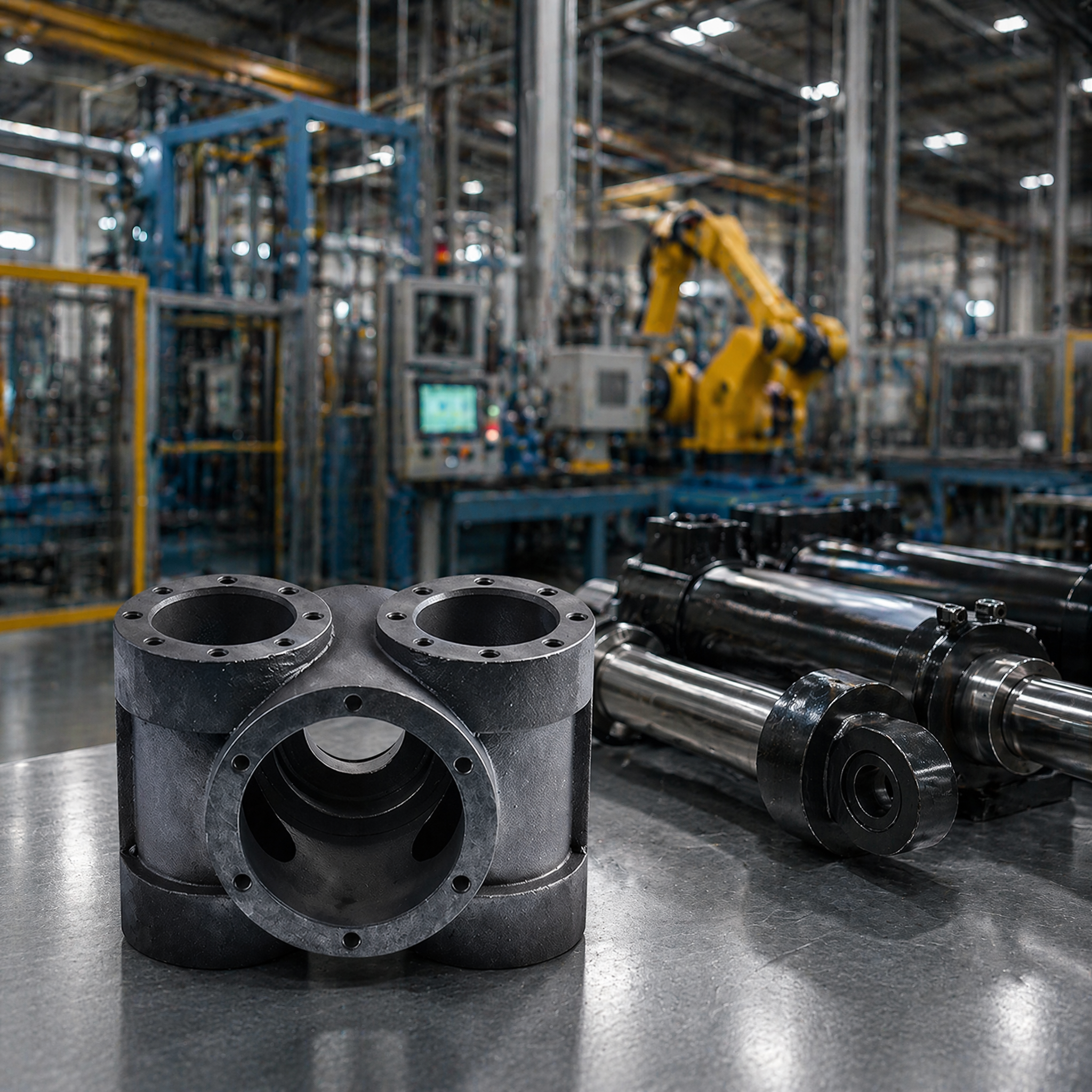
A rotary actuator housing acts as the structural protective frame for internal racks, pistons, and gear wheels. If you look at the heavy-duty components in the images labeled box body.jpg and box body-1.jpg, you can see the robust, thick-walled design of these specialized parts.
The housing holds all the moving pieces together while handling intense twisting forces. If the housing bends even a fraction of a millimeter under pressure, the internal teeth will slip, causing catastrophic machine damage. Consequently, industrial buyers look for heavy-duty models like the S100 and D180 gear rack housings to ensure total operational safety.
Why QT500 Ductile Iron and Lost Foam Casting Matter
When choosing an actuator shell, material strength is the most important factor. Top manufacturers use QT500 ductile iron for premium models, such as the S180 and S140 high-torque housings. Unlike brittle standard gray iron, QT500 ductile iron contains tiny spherical nodules of graphite. This unique structure allows the metal to bend slightly under extreme force instead of snapping.
Furthermore, engineers utilize an advanced production method called lost foam casting to shape these complex parts. If you examine the clean, precise contours shown in box body-2.png and box body-3.png, you can see the excellent surface finish this method provides. Lost foam casting offers incredible benefits:
-
Fewer Parts to Fail: It allows the factory to cast complex internal fluid lines and gear chambers as a single solid piece, removing weak welded seams.
-
Lighter Weights: The process creates highly uniform walls, eliminating excess unneeded metal while preserving extreme strength.
-
Exact Dimensions: It delivers near-net-shape parts that require minimal extra machining time, saving you money on production costs.
Managing Intense Structural Shock Loads
Heavy-duty heavy equipment often faces sudden, violent stops during daily work cycles. For example, when a rapid robotic arm or a massive crane mechanism comes to a sudden halt, massive kinetic forces rush through the system.
To smooth out these movements, machines rely on dynamic safety parts like a hydraulic damper or a hydraulic shock absorber. These active damping devices convert rapid kinetic motion into thermal energy to protect the equipment. In addition, using reliable hydraulic shock absorbers keeps harsh vibrations from cracking your structural mounts.
However, while a shock absorber hydraulic assembly dampens the moving fluid spikes, the rotary actuator housing must still absorb the leftover physical twisting stress. If your housing is weak, even the best hydraulic damper setup cannot prevent the box frame from warping. Therefore, pairing a premium QT500 cast housing with advanced damping components is the best way to safeguard your hardware.
Comprehensive Sizes and Custom Options
Industrial projects vary greatly, so standard sizes do not fit every single machine blueprint. To solve this problem, manufacturers offer a broad selection of technical configurations to fit your exact system dimensions.
If you study the detailed technical parameter chart inside Hydraulic cylinder 2024(2)_Sheet1.jpg, you will find that housings are built to match specific cylinder diameters. The specifications range from small DA 40 units up to massive DA 320 heavy-industry housings. Furthermore, the chart reveals customizable parameters for oil port interfaces (M1 and M2 options) and custom mounting hole lengths (L3). This flexible engineering data ensures you can find a drop-in replacement part or build a brand-new custom layout with ease.
Conclusion
A high-torque rotary actuator housing is the structural foundation of every successful fluid power system. By investing in premium QT500 ductile iron parts shaped by advanced lost foam casting, you ensure your heavy machinery remains durable, stable, and completely safe under maximum workloads.
Are you looking to upgrade your automated factory lines, source reliable replacement gear rack housings, or organize a bulk custom manufacturing project? Choosing rugged, single-piece cast box bodies is the smartest way to minimize field downtime and protect your operational budget for the long haul.


